Last updated November 18, 2026
Home Addition Contractor Troubleshooting: Common Problems and How to Fix Them
The most expensive home addition mistake isn’t hiring the wrong contractor. It’s noticing the warning signs two months in and doing nothing because you don’t know what leverage you actually have. We’ve watched Boulder City homeowners sit on a bowed header or a skipped inspection for weeks, convinced that speaking up would poison the relationship. Meanwhile the problem quietly hardens into a five-figure fix.
Here’s the reframe: nearly every addition problem is a documentation problem first and a construction problem second. This guide gives you concrete symptoms to look for at each phase – foundation, framing, rough-in, finish – plus the exact steps to take when you spot them, including how to write it up so the record protects you.
Quick Answer
When a home addition runs into trouble, do three things in order: photograph and date the problem, put it in a short written message to the contractor (text or email works) requesting a response within a set window, and check whether the issue touches permitting or inspection. Almost everything else – delays, quality disputes, missed milestones – gets resolved fastest when there’s a written trail. If the problem is structural, safety-related, or tied to a failed inspection, pause work in that area and get it inspected before covering anything up.
Table of Contents
- The Phase-by-Phase Checklist: What Finished Work Should Look Like
- What to Do When Your Contractor Misses a Scheduled Inspection
- How to Document Problems Without Blowing Up the Project
- Contractor Delay: When It’s Your Problem vs. When It Breaches the Contract
- When and How to Bring In a Third-Party Inspector
- Change Orders and Surprise Invoices: How to Push Back
- Boulder City Climate, Code, and Desert-Specific Problems
The Phase-by-Phase Checklist: What Finished Work Should Look Like
Most cut corners are visible if you know where to look – and none of them require climbing a ladder or reading a codebook. Here’s what to check at each phase and what a shortcut looks like next to it.
Foundation
- Should look like: A clean, level slab or stem wall with visible anchor bolts spaced along the perimeter, no honeycombing (pitted, exposed aggregate) on the surface, and a moisture barrier visible at the edges.
- Cut corner looks like: Wide cracks wider than a credit card, soft or crumbly spots when you press with a key, or footings that stop short of the planned dimensions. On Boulder City lots, expansive soils and heavy seasonal temperature swings make a proper footing depth non-negotiable – shortcuts here surface 18 months later as drywall cracks.
Framing
- Should look like: Straight studs, headers sized for the span, consistent 16-inch on-center spacing you can measure with a tape, and no notched or bored joists in the middle third of a span.
- Cut corner looks like: A floor that bounces noticeably, doors that don’t want to latch before drywall is even up, or a “header” that’s really just a doubled-up 2×4. Take a photo of every wall before drywall closes it – that record is worth its weight in gold later.
Rough-In (Electrical, Plumbing, HVAC)
- Should look like: Neat, parallel runs, boxes set flush to framing, proper nail plates over stud penetrations, and labeled breaker locations marked on the panel before cover-up.
- Cut corner looks like: Wires draped diagonally across framing (they should run perpendicular to joists where possible), plumbing without shutoff valves you can reach, or HVAC ducts crushed into a corner joist bay. In our experience, rough-in is the phase homeowners skip checking – and the phase that’s most expensive to reopen.
Finish
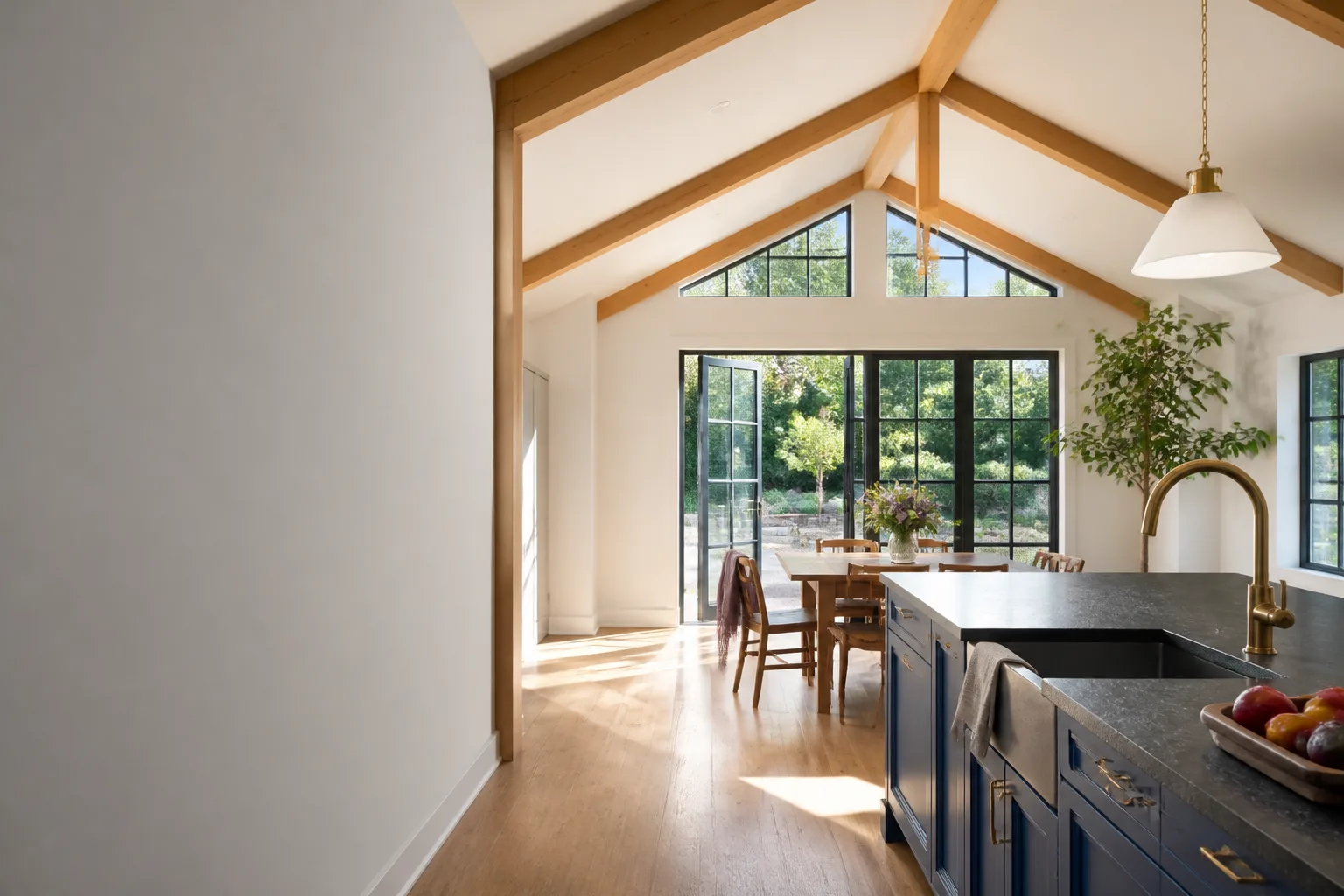
- Should look like: Door reveals even at the top and sides, drywall corners crisp, tile grout lines consistent, paint with no flashing from sunlight on a Boulder City afternoon.
- Cut corner looks like: Caulk used to hide a bad seam, paint sprayed over outlets and hardware, or trim that doesn’t sit tight. Walk the room in raking light (a flashlight held flat to the wall) and the shortcuts reveal themselves.
What to Do When Your Contractor Misses a Scheduled Inspection
A missed inspection is the single most diagnostic failure in an addition project. It’s not just a scheduling slip. It usually means the contractor either didn’t pull the permit, pulled the wrong one, or is trying to move past a phase before it’s ready to be seen. That’s why it deserves more attention than a late tile delivery.
- Verify the permit status directly. Call the Boulder City building department and ask for the permit number and the inspection history. You can do this without the contractor’s permission – it’s your property.
- Ask for the inspection slip in writing. A legitimate contractor keeps the correction notice or approval. If they can’t produce it, that’s information.
- Don’t let the next phase start over an uninspected one. Drywall over uninspected framing is a common shortcut and the hardest to undo. If they want to close walls, ask for the inspection first.
- Send a short written note confirming the inspection date and requesting the result. “Just confirming the framing inspection is scheduled for Thursday and I’ll get the outcome in writing.” That one sentence creates a timeline.
- Escalate if it repeats. One missed inspection can be a genuine scheduling conflict. Two in a row is a pattern, and patterns are the trigger for the third-party step below.
If you’re still choosing a contractor for a Boulder City addition, ask for the permit history on their last three jobs as part of your reference check. It’s a far better signal than a stack of photos.
How to Document Problems Without Blowing Up the Project
Documentation is not a threat; it’s a record. The tone that works is boring, factual, and short. Nobody gets defensive over a sentence that says what happened and asks what’s next.
The formula that works in practice:
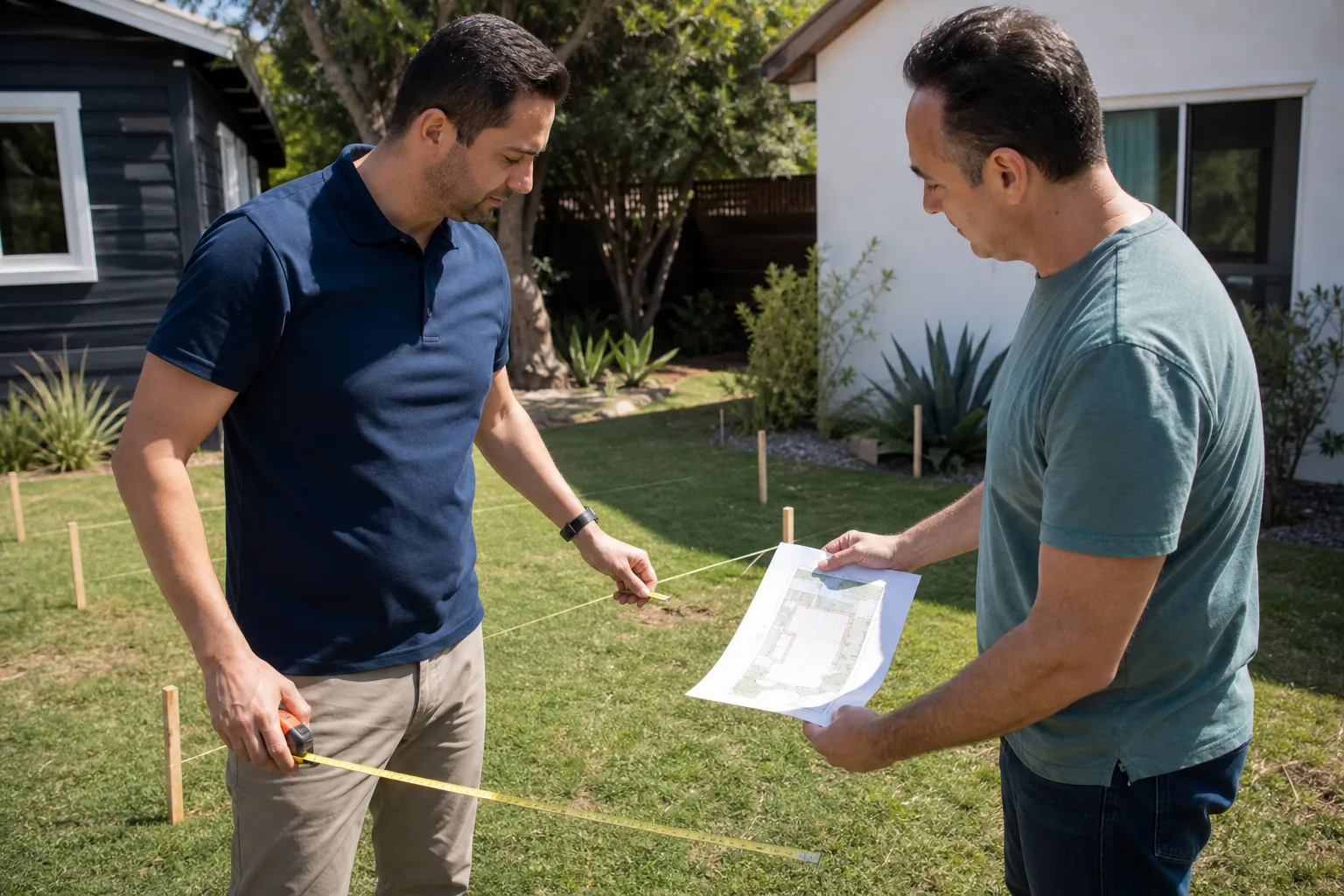
- Date and describe what you see, without adjectives. “August 14: the north wall framing shows a 1/2-inch gap between the header and the top plate.”
- Attach one photo, ideally with something for scale. More photos invite argument; one clear photo settles it.
- State the request in a single line: “Can you take a look at this by Friday and let me know the plan?”
- Name the consequence only if it’s real: “If it’s not addressed before drywall, I’d like to hold the next milestone payment.”
- Send it in a channel that timestamps – email or text. A phone call with a follow-up “as we discussed” email is the gold standard.
Keep everything in one folder. If you eventually need a lawyer or a mediator, a clean chronological record is the difference between a fast resolution and a slow one. Boulder City’s small-building-department culture means the paper trail usually gets read by the same inspector who’ll see the job, so a factual record helps you more than a dramatic one.
Contractor Delay: When It’s Your Problem vs. When It Breaches the Contract
Delay is the most common addition complaint and the most misunderstood. Not every delay is a breach – and treating a normal weather hold as one can cost you the goodwill you need to finish the job.
Here’s the split we use in conversations with homeowners:
- Delay you absorb: weather holds, unexpected soil conditions in the footing excavation, a supplier’s lead time on a specific window, and permit-review queues. Most contracts include a force-majeure or “unforeseen conditions” clause that covers these.
- Delay that breaches the contract: the crew not showing up for a scheduled week with no explanation, stops for the contractor to work a different job while yours sits open, a missed milestone with no written notice, or a subcontractor sequence that leaves your framing exposed.
- The gray zone: a delay the contractor causes but didn’t disclose – a renegotiated subcontractor agreement, a change order they dragged their feet on. Disclose it or it’s a breach.
Your contract should specify a substantial completion date and a notice requirement for delays. If it does, the test is simple: did you get written notice within the window the contract requires? If not, you have leverage. If it doesn’t specify, that’s a lesson for the next project – and for Boulder City additions, it’s worth asking specifically how the contractor handles summer heat holds, since midday work windows shrink in July and August.
When and How to Bring In a Third-Party Inspector
A third-party inspector is a licensed, independent professional who reviews the work on your behalf – separate from the municipal inspector and unconnected to the contractor. You bring one in when the stakes justify the roughly $400 – $900 cost of a mid-project review.
The right triggers:
- Two or more missed or failed inspections with unclear explanations.
- Visible structural concerns – cracks, slope, water intrusion.
- A major change order you didn’t expect and can’t reconcile with the drawings.
- A dispute that’s moved from “annoying” to “I don’t trust what I’m being told.”
How to find one who isn’t in the contractor’s orbit:
- Search for a licensed residential inspector who lists “phase inspection” or “construction progress inspection” – not just pre-purchase home inspections.
- Ask up front: “Have you worked with this contractor on any project in the last five years?” A “no” is what you want.
- Get the scope in writing – one inspection or three (framing, rough-in, finish)? What’s included, what’s not.
- Don’t tell the contractor the inspector’s name until the report is in hand. Not adversarial, just cleaner.
- Share the report with the contractor in writing and ask for a written response to each item.
For bigger builds – a detached ADU, for example – a mid-project inspection is cheap insurance. You can read more about how we approach that scope in our ADU Builders in Boulder City guide.
Change Orders and Surprise Invoices: How to Push Back
The most common surprise-invoice trick is scope that appears on the final bill without a signed change order. Change orders exist for a reason – they’re your pause button. If work moved forward without one, you have a strong position, and here’s the language that works:
“Can you send me the signed change order for this line? I don’t see one on file, and I want to make sure we’re aligned before processing.” Polite, precise, and it puts the burden back where it belongs.
Two rules that prevent 80% of these disputes:
- Nothing gets added to the project without a written change order signed by both sides, however small.
- The written price locks before work starts – and that’s how we run every project here. The Home Addition Contractor in Boulder City page explains what a written upfront price actually covers.
Boulder City Climate, Code, and Desert-Specific Problems
Boulder City additions face problems that don’t show up in most contractor troubleshooting guides, because the town sits in a specific pocket of the desert. If you’re troubleshooting a project here, watch for these:
- Sun-driven cracking on west-facing walls. Afternoon sun on a Boulder City elevation can drive interior wall temperatures high enough that finish cracks open along drywall seams faster than they would on a shaded lot. If you see a repeating crack pattern on one side of the addition only, that’s a clue – not a coincidence.
- HVAC undersizing in garage conversions. Converting an unconditioned garage into living space is a common Boulder City room addition, and the same tonnage that served the rest of the house doesn’t cool a west-facing converted garage. If your addition runs 4 – 6 degrees warmer than the main house in July, the HVAC was probably carried over without a load recalc.
- Load calculations for Tile Roofs. Many Boulder City homes carry heavy tile roof assemblies. A room addition that ties into an existing roof needs the load actually calculated – not estimated from a chart. A sagging tie-in is a slow, expensive problem.
- Monsoon-season drainage. The late-summer rain bursts here overwhelm a roof-to-grade path that looks fine during the dry months. If your addition’s site grading pools water against the new stem wall, fix it before it becomes a foundation problem.
- Historic-district review. Portions of Boulder City carry review requirements that can push a permit approval out weeks longer than neighbors assume. If your addition is in one of those zones, that’s a delay you should plan around, not fight.
If any of this is where your project is headed next, our Room Addition Contractor in Boulder City page has the local code and sequencing detail, and the Sutton ADU Builders Boulder City home page covers how we structure the written price and crew vetting upfront.
Common Mistakes to Avoid
- Waiting to raise a concern because you don’t want to “be difficult.” The cost of a two-week silence on a bowed header is far higher than the cost of a polite text. Speak up the day you see it.
- Doing your project on a verbal agreement. Boulder City’s small permit office is friendly, and that’s exactly why homeowners skip the paperwork. Don’t. Get the written price, the scope, and the completion date.
- Letting drywall close over uninspected framing. Once the walls are up, an inspector can’t see what’s behind them. This is the single most recoverable mistake – if you catch it in time.
- Treating weather delays as contract breaches. Boulder City summer heat and monsoon rain are real, and they’re in almost every contract’s force-majeure clause. Pick your fights.
- Approving a “small” change without a change order. “Just a little extra framing” becomes an $1,800 invoice you can’t unwind. Sign it or skip it.
- Hiring a crew you’ve never been properly introduced to. In our experience, the homeowner’s sense that something is off is often right – and the fix is to know exactly who’s coming to your property before they arrive. That’s the whole point of the Threshold Standard.
- Getting a third-party inspector after the dispute has hardened. An inspector who shows up mid-project can steer the work back on track. An inspector who shows up during a lawsuit just helps draft the paperwork.
When to Call a Professional
Some problems are worth a text to your contractor. Others need a trained eye, and quickly. Call a professional if you see more than a quarter-inch of water inside the new structure, cracks that widen over a few days, a floor that bounces noticeably, a roof tie-in that sags, or a failed inspection with no clear written explanation. Those are the symptoms where waiting almost always costs more than acting. If the contractor relationship has broken down entirely – repeated missed inspections, unexplained stops, surprise invoices – a licensed addition contractor can help you assess what’s salvageable before you sink more money in. Sutton ADU Builders Boulder City offers free estimates in Boulder City for homeowners sorting through exactly this. Call (888) 296-0055 to schedule one, and you’ll get a written price before any work begins.
Frequently Asked Questions

Yes, more than most homeowners assume. A missed inspection usually signals the permit wasn’t pulled correctly, the phase isn’t ready to be seen, or the contractor is trying to move ahead without permission. Call the Boulder City building department directly, confirm the permit history, and ask for the inspection slip in writing. If it repeats, that’s the point to bring in an independent inspector.
Keep it factual and short. Date the issue, describe what you see, attach one clear photo, and ask a single question with a response window. Skip adjectives and accusations. Send it by email or text so it timestamps, and keep everything in one folder. In our experience, a boring written record gets addressed faster than an emotional phone call, especially with the small crews working Boulder City additions.
Sometimes yes, but not unilaterally. Your contract governs what counts as a defect and what triggers a payment hold. The safe path is to put the concern in writing, request a written response within a set window, and hold the specific milestone payment tied to that work – not the entire project. If the contract is unclear, get a quick read from a construction lawyer before you stop paying.
Expect roughly $400 – $900 for a phase inspection, depending on how many phases are covered. Framing, rough-in, and finish inspections can be bundled. It’s worth it on any addition over roughly $80,000 – cheap insurance against a hidden defect that costs five figures to reopen. Call (888) 296-0055 for a written estimate on your Boulder City addition and we can walk you through what to check.
That’s a legitimate reason to pause. Ask for the crew lead’s name and ID before they start work. Reputable contractors operate under a system like the Threshold Standard: every technician is background-checked and identity-verified, and the name and photo arrive with the homeowner before the visit. If that’s not how your contractor works, ask why. Boulder City homeowners hire crews onto their property – knowing who’s at the door is a fair expectation, not an unreasonable request.
It shouldn’t – not without a signed change order. Expect a written price before any work begins, with the scope, materials, and completion timeline defined. If a line item appears on your invoice that wasn’t in the original scope, ask for the change order in writing. No signed change order, no obligation. That’s the standard we hold ourselves to, and it’s the one to ask any Boulder City addition contractor about before signing.
The Bottom Line
Addition problems rarely announce themselves – they show up as a vague unease that something’s off. The homeowners who come out ahead are the ones who turn that unease into a written record within a day or two, check the permit history themselves, and know when they’re absorbing a normal weather delay versus staring at a breach. Keep one folder. Use short, factual messages. Get a mid-project inspection on anything big. And choose a contractor who gives you a written price upfront and tells you exactly who’s coming to your property – which is how we run every addition and ADU project out of Boulder City.
Call (888) 296-0055 for a free estimate. You’ll get a written price before work begins, a crew whose name and photo reach you before they arrive, and the 365-Day Done Right Promise standing behind the work.
Written by the team at Sutton ADU Builders Boulder City.