Last updated November 18, 2026
Home Addition Contractor Warning Signs Every Homeowner Should Know
The most dangerous contractor red flag isn’t a bad review. It’s a contractor who can’t tell you the full names and backgrounds of every person who will work inside your home. That single answer reveals more about how they operate than any reference check, any portfolio, any polished proposal. When a homeowner in Boulder City asks us why we put names and photos in writing before a crew arrives, the honest answer is that this is the one question that separates organized, accountable builders from the ones who improvise. In the guide below you’ll learn the pre-contract warning signs that are easy to rationalize away, the math behind a suspiciously low bid, and how to run a five-minute crew transparency test before you sign anything.
Quick Answer
The main warning signs of a problematic home addition contractor are a bid far below the others with no written explanation, vague contract language about materials and scope, a refusal or stumble when asked who exactly will be on your property, pressure to skip a second opinion, and a payment schedule that requires large sums before work begins. One red flag alone is a question. Three or more together are a reason to walk away and get another estimate.
Table of Contents
- Why an Unusually Low Bid Is a Warning Sign, Not a Win
- What “We’ll Figure Out the Details as We Go” Really Costs You
- The Crew Transparency Test: Who Will Be on Your Property?
- Why a Contractor Who Discourages a Second Opinion Should Be Disqualified
- Payment Schedule Red Flags: Draws vs. Large Upfront Demands
- Warning Signs That Show Up in Boulder City Specifically
- A Pre-Signature Checklist You Can Use This Week
- Common Mistakes to Avoid
Why an Unusually Low Bid Is a Warning Sign, Not a Win
A bid that comes in 25 to 40 percent under every other bid for the same addition isn’t a bargain; it’s a math problem. Materials, labor, permits, and overhead are what they are, and no builder gets a secret discount on lumber. When the number is dramatically lower, something has to give, and that something is usually invisible on the proposal page.
Here’s the math in practice. On a room addition in Boulder City priced at $120,000 by three builders and $78,000 by a fourth, the $42,000 gap has to come from somewhere. Common places it hides:
- Thinner or substituted materials. Standard framing swapped for lighter stock, a lower grade of exterior cladding, or a “value” window package that isn’t the one specified.
- Omitted line items. Permit fees, engineering, debris hauling, and final paint often don’t appear on low bids and reappear later as change orders.
- Unpaid or uninsured labor. Subcontractors working without workers’ comp or general liability coverage, which becomes your liability if someone gets hurt on your property.
- No contingency and no warranty reserve. A builder with nothing set aside for callbacks won’t come back when something fails a year later.
The fix isn’t to distrust every low number. It’s to ask the builder to walk you through their bid line by line and explain what’s included and, more importantly, what isn’t. A builder who can do that calmly is probably fine. A builder who gets defensive about line items is telling you something. For a fuller look at what additions actually cost in the area, see our Home Addition Contractor in Boulder City page, where we publish real ranges rather than teaser numbers.
What “We’ll Figure Out the Details as We Go” Really Costs You
“We’ll figure out the details as we go” is the single most expensive sentence in a construction contract. What it means in plain English is that the scope isn’t defined, so every decision becomes a negotiation, and every negotiation ends up on your invoice. The homeowner has no leverage once the walls are open and the crew is standing around waiting for a decision.
Vague contract language tends to have a recognizable shape. Watch for:
- “Allowances” without amounts. An allowance for tile or fixtures is fine, but a $2,000 allowance on a bathroom you know will cost $6,000 is a set-up for a change order.
- “Builder-standard materials.” If a brand and model aren’t named, you’re agreeing to whatever is cheapest the week the crew buys it.
- “To be determined” or “by others.” Every TBD is a future change order. Every “by others” is work you’ll be shopping for mid-project.
- No completion date, or “subject to weather.” Some weather delay is real. A contract with no finish date at all gives the builder no incentive to finish.
A well-written proposal for a home addition is long. Ours usually runs six pages for a modest addition because it names materials, brands, and the exact sequence of work. If a two-page estimate is all you’re handed, ask for the full scope in writing before you sign. Compare that to how we approach a Room Addition Contractor in Boulder City project: everything gets named before the first permit is pulled.
The Crew Transparency Test: Who Will Be on Your Property?
Ask this exact question before you sign: “Can you tell me the full names and backgrounds of every person who will be inside my home, including subcontractors?” The answer you get tells you almost everything.
A trustworthy answer sounds like this: “The lead carpenter is Maria, licensed and background-checked, and I’ll send you her photo and ID before she arrives. The electrician is a licensed subs contractor with his own insurance; I can send you his name and license number today.” It’s specific. It’s verifiable. It comes without a pause.
A deflection sounds like this: “Oh, we use a rotating crew, whoever’s available,” or “I don’t know yet, we’ll see when we get there,” or “What, don’t you trust us?” Those aren’t answers. They’re pressure.
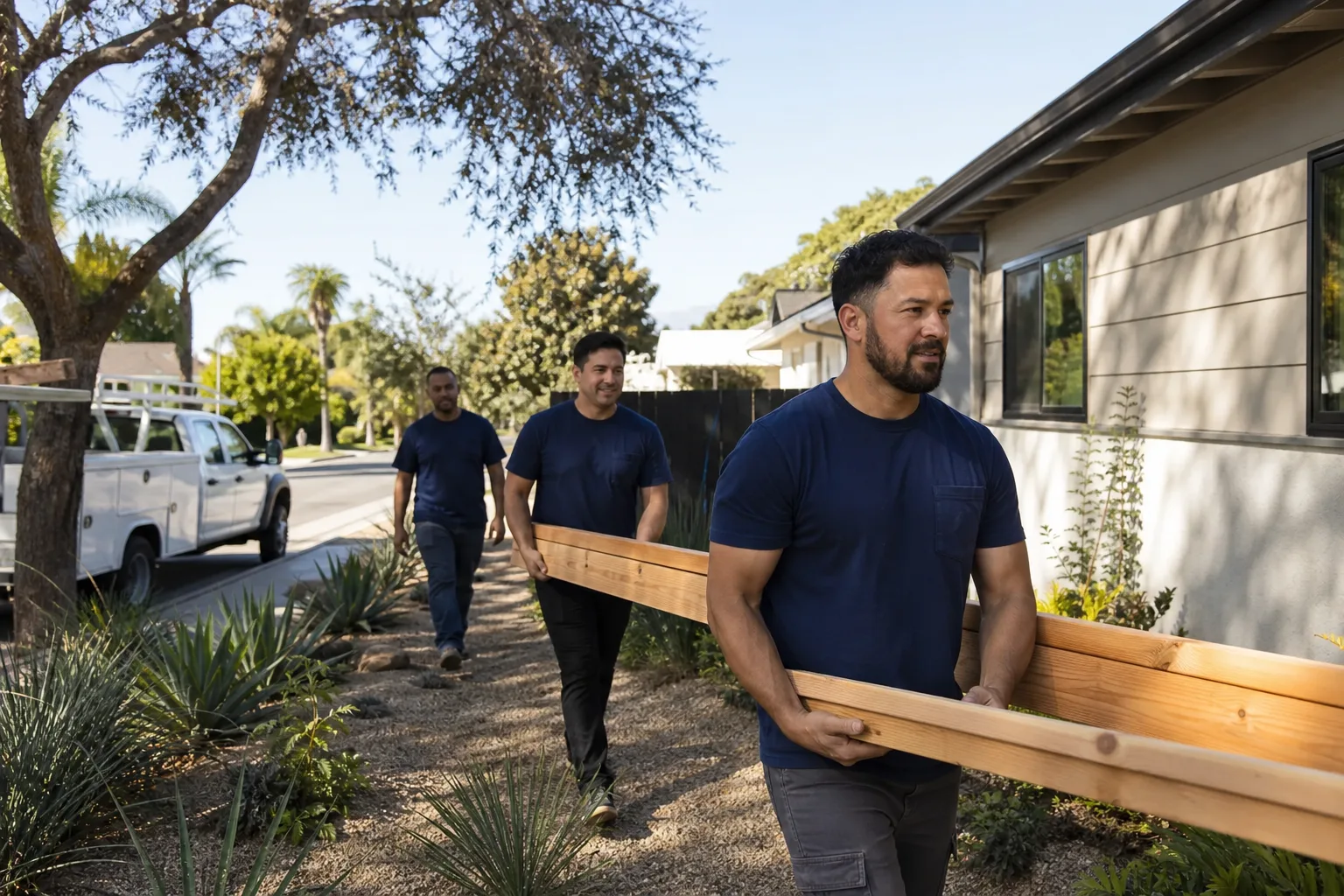
Why this matters so much in Boulder City specifically: many additions here happen on lots where the homeowner is present all day, often home alone, often with young kids, and the addition work runs for three to six months. That’s a long time to have unfamiliar people walking through your yard. Our own standard, which we call the Threshold Standard, is that every technician is background-checked, identity-verified, uniformed, and photo-badged, with name and photo sent to you before arrival. That’s not marketing language; it’s a system. Ask any builder you’re considering what their system is, and if they don’t have one, that’s your answer. Running the same test on an ADU Builders in Boulder City project is the same conversation.
Why a Contractor Who Discourages a Second Opinion Should Be Disqualified
Any contractor who discourages you from getting a second opinion, whether with a sigh, a “my price is only good until Friday” deadline, or an outright “the other guy will just cut corners,” is telling you they don’t want to be compared. A confident builder welcomes the comparison because they know their bid is honest. The one who flinches has a reason.
Holding that line politely is easier than it sounds. A three-sentence script works:
- “I’m getting one more estimate regardless, but I appreciate your time and I’ll be in touch.” No apology, no explanation.
- If they push a deadline: “I don’t sign contracts under time pressure. If that changes your pricing, please let me know in writing.”
- If they badmouth the other bidder: “I’d rather compare line items than hear about the other contractor. Can you send me yours in writing?”
In our experience, a Boulder City homeowner who gets three written bids and compares them line by line almost always chooses the middle bid, not the lowest. That tells you everything about what low bids actually win: they win the projects that go wrong.
Payment Schedule Red Flags: Draws vs. Large Upfront Demands
Asking for a 30 to 50 percent deposit before any work starts is the clearest cash-flow warning sign in the trade. A builder who needs your money to buy the lumber for your project is using your project to fund the last one, and if the last one stalls, yours does too.
A legitimate draw schedule tracks actual progress. Here’s what that looks like:
- Small initial deposit, typically enough to cover permit fees, plans, and initial materials mobilization. Not half the contract.
- Draw at framing complete and inspected, after the city has signed off.
- Draw at rough-in complete (plumbing, electrical, HVAC inspected).
- Draw at drywall or finishes halfway.
- Final payment at substantial completion, after a walkthrough and a punch list, with a retainage held until the punch list is closed.
Demands to watch for: “I need 50 percent to lock in your spot” (that’s not a deposit, it’s a loan), “we don’t do draws, it’s a single payment” (that’s a builder with no working capital), or “cash only” (that’s a paper trail problem you don’t want your name on). On a documented job, every draw ties to an inspection. If your builder’s schedule doesn’t, ask them to revise it before you sign.
Warning Signs That Show Up in Boulder City Specifically
Some red flags are universal. Others are shaped by the local market and the climate, and those are the ones homeowners most often miss because they sound like local savvy.
“Everything’s fine, we build in Boulder City all the time.” If a contractor can’t tell you which Boulder City neighborhoods they’ve worked in, or what the typical lot setback looks like, “all the time” is a story. Ask for two recent addresses you can drive past, and for the name of the inspector who signed off. A builder who can produce those within an hour is legitimate.
No mention of desert heat in the schedule or materials. Boulder City hits 105°F or higher most summer afternoons, and that affects everything from concrete cure times to the roofing window. A contractor who doesn’t mention heat planning is either inexperienced here or glossing over a real cost.
No talk of wildland interface requirements. Parts of Boulder City sit adjacent to open desert, and exterior materials, vents, and roof details matter for defensible space and fire resistance. James Hardie fiber-cement cladding has become a default for exactly this reason; a builder who hasn’t thought about it is a builder who hasn’t worked this side of the valley.
No permit talk. Additions require a building permit in Boulder City, and the inspection sequence isn’t optional. A contractor who says “we’ll skip the permit and save you time” is saving you exactly nothing and exposing you to a future problem when you sell. Read more of our own thinking on this in our Sutton ADU Builders Boulder City home page.
A Pre-Signature Checklist You Can Use This Week
Before you sign any addition contract, run this list. If any answer is “no” or “I’m not sure,” get it in writing before you sign.
- Can the builder name every person who will be on my property, including subs, with backgrounds?
- Is the entire scope in writing, with materials named by brand and model, and completion date defined?
- Is the payment schedule tied to inspected milestones, with the largest payments late in the job?
- Have I seen two recent completed additions I can drive past?
- Have I compared three written bids line by line?
- Does the contract state what happens if something’s wrong a year after completion?
- Is the builder insured, bonded, and state-licensed, with proof in hand?
- Have I called their phone number and reached a real person, not a voicemail tree?
Run that eighth question yourself this week. It’s the fastest read on any builder. Our own line, answered live around the clock, is (888) 296-0055. If that’s what a builder is like on day one, that’s what they’ll be like at month five when you have a question about a missing window.
Common Mistakes to Avoid
- Choosing the lowest bid because the numbers are clean. The lowest bid usually means the largest unlisted items. Ask what’s excluded before you compare, not after.
- Not asking who’ll be on the property. In Boulder City, additions run three to six months, so the crew becomes part of your household. Ask who, and ask for names in writing.
- Signing a one-page estimate as the full contract. A real addition contract names materials, brands, and the finish date. A one-pager is a handshake with a signature line.
- Accepting a large upfront deposit as normal. It isn’t. Progress-based draws are normal; a 50 percent deposit before dirt is turned is a cash-flow warning.
- Skipping the permit to “save time.” Unpermitted additions are discovered at resale and can force a retroactive inspection process that costs far more than the original permit.
- Falling for a Friday-only price. A contractor who pressures you with a deadline is telling you they don’t want you to compare. Walk away and get the comparison.
- Not asking what the warranty covers. “Warranty” means nothing unless it’s written, named, and has a duration. Ours is the 365-Day Done Right Promise: if the work isn’t right within a full year of completion, we make it right, in writing, on every project.
When to Call a Professional
Call a professional builder right away if any of these apply: a contractor has started demolition without a signed contract and permit, you’ve discovered the crew on your property isn’t insured, you’re being asked for a second deposit before the first milestone is finished, or your existing addition has failed an inspection and the original builder has gone quiet. Those situations need a fresh written scope and a fresh permit strategy, not a patch. If you’re still in the bidding stage and want a second written number to compare against one you’re unsure about, we’ll produce one for free. Sutton ADU Builders Boulder City offers free estimates in Boulder City; call (888) 296-0055 for a written price before any work begins.
Frequently Asked Questions
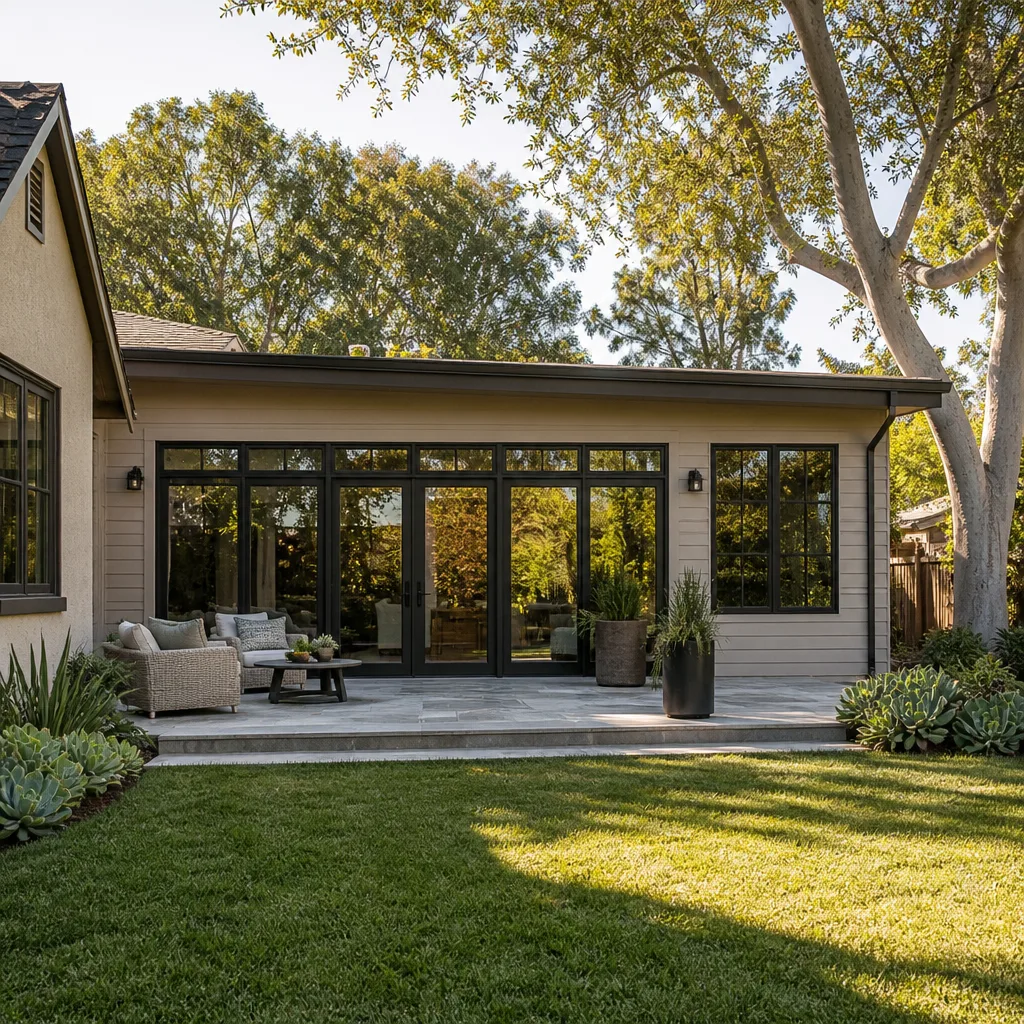
Most room additions in Boulder City run somewhere between $180 and $320 per square foot depending on finishes, foundation conditions, and site access, and detached ADUs in this size range typically run $180,000 to $320,000 before site work. A 400-square-foot room addition often lands between $85,000 and $130,000 when permitted and built to Boulder City code. Call (888) 296-0055 for an exact quote on your plan; estimates are free.
The biggest red flag is a contractor who can’t tell you the full name and background of every person who will be inside your home, including subcontractors. That single question exposes how organized the operation actually is. A confident builder answers it in under a minute with names and photo IDs; an unprepared one deflects, jokes, or changes the subject.
A bid 25 to 40 percent under every other proposal usually means something has been quietly removed from the scope, like permits, engineering, debris hauling, or finish materials, and it will reappear as a change order later. Materials and labor have real floors, so a dramatically lower number is almost never a discount. Ask the builder to walk you through their line items and name what’s excluded.
Yes. Additions in Boulder City require a building permit, and the standard inspection sequence (foundation, framing, rough-in, insulation, drywall, final) is not optional. A contractor who offers to skip the permit is exposing you to a resale problem and potential retroactive inspections. Every addition we take on pulls permits and passes inspections as part of the scope.
A fair schedule ties each draw to a completed and inspected milestone, with a small initial deposit and the largest percentages late in the project. Progress-based draws at framing, rough-in, drywall, and completion are standard. A demand for 30 to 50 percent before work starts is a warning sign, not a deposit.
Ask the builder to send you names, photos, and ID verification for every person who will enter your property, including subcontractors, before the first day. A legitimate builder will send that information in writing without pushback. Call (888) 296-0055 if you want to see what that looks like on a Boulder City project; estimates are free.
The Bottom Line
Bad addition contractors rarely announce themselves with a bad review. They look busy, confident, and cheaper than the competition. The warning signs are quieter: a bid that doesn’t add up, a scope that stays vague, a crew list that can’t be produced, a nagging push away from a second opinion, a deposit schedule that funds the builder instead of the work. Take those signs seriously before you sign, and get three written bids you can compare line by line. When you’re ready for a written price before any work begins, backed by a 365-Day Done Right Promise, call Sutton ADU Builders Boulder City at (888) 296-0055 for a free estimate.
Written by the team at Sutton ADU Builders Boulder City.