How Long Does It Take to Build an ADU in Boulder City, NV?
A detached ADU in Boulder City takes 8 to 14 months from first planning application to move-in day. That’s longer than most ADU timeline guides claim, because those guides are built on Clark County’s rules and don’t account for Boulder City’s separate two-step review. If you want the short answer you can plan around: budget 10 to 18 weeks for permits alone, then 6 to 10 months of construction. Call Sutton ADU Builders Boulder City at (888) 296-0055 and we’ll walk your specific lot through the sequence before you commit to anything.
Key Takeaways
- Boulder City runs planning approval and building permits as two separate reviews, adding 4 to 10 weeks over unincorporated Clark County.
- Prefab units from Cover, Dvele, or Plant Prefab save 6 to 10 weeks on site but add a 12 to 20 week factory lead time to the front of the schedule.
- Historic-character zone projects can lose another 4 to 6 weeks if a design review submission misses the committee’s monthly meeting.
- July through September monsoon season means slab pours and stucco work need weather contingency days built in.
- Realistic all-in build: $180,000 to $320,000 before site work for a detached unit, and 8 to 14 months from application to keys.
The permit clock doesn’t start where you think it does
Most homeowners assume the timeline starts the day someone submits building plans. In Boulder City, it doesn’t. The clock starts weeks earlier, when your planning application clears. That upstream step is invisible in generic ADU guides, and it’s where the first real delay lives.
Here’s why. Boulder City is one of the few Nevada municipalities that still enforces its own building codes and zoning outside Clark County jurisdiction. That independence is part of what makes the town feel the way it does. It also means your project moves through a local process with its own pace, and the planning stage has to finish before the building department picks up the file. In unincorporated Clark County those two reviews can run at the same time. Here they don’t.
What that looks like in practice:
| Phase | Boulder City timeline | Unincorporated Clark County comparison |
|---|---|---|
| Planning application and approval | 4-10 weeks | Runs concurrent with building review |
| Building permit review | 6-8 weeks | 6-10 weeks combined |
| Total to permit in hand | 10-18 weeks | 6-10 weeks |
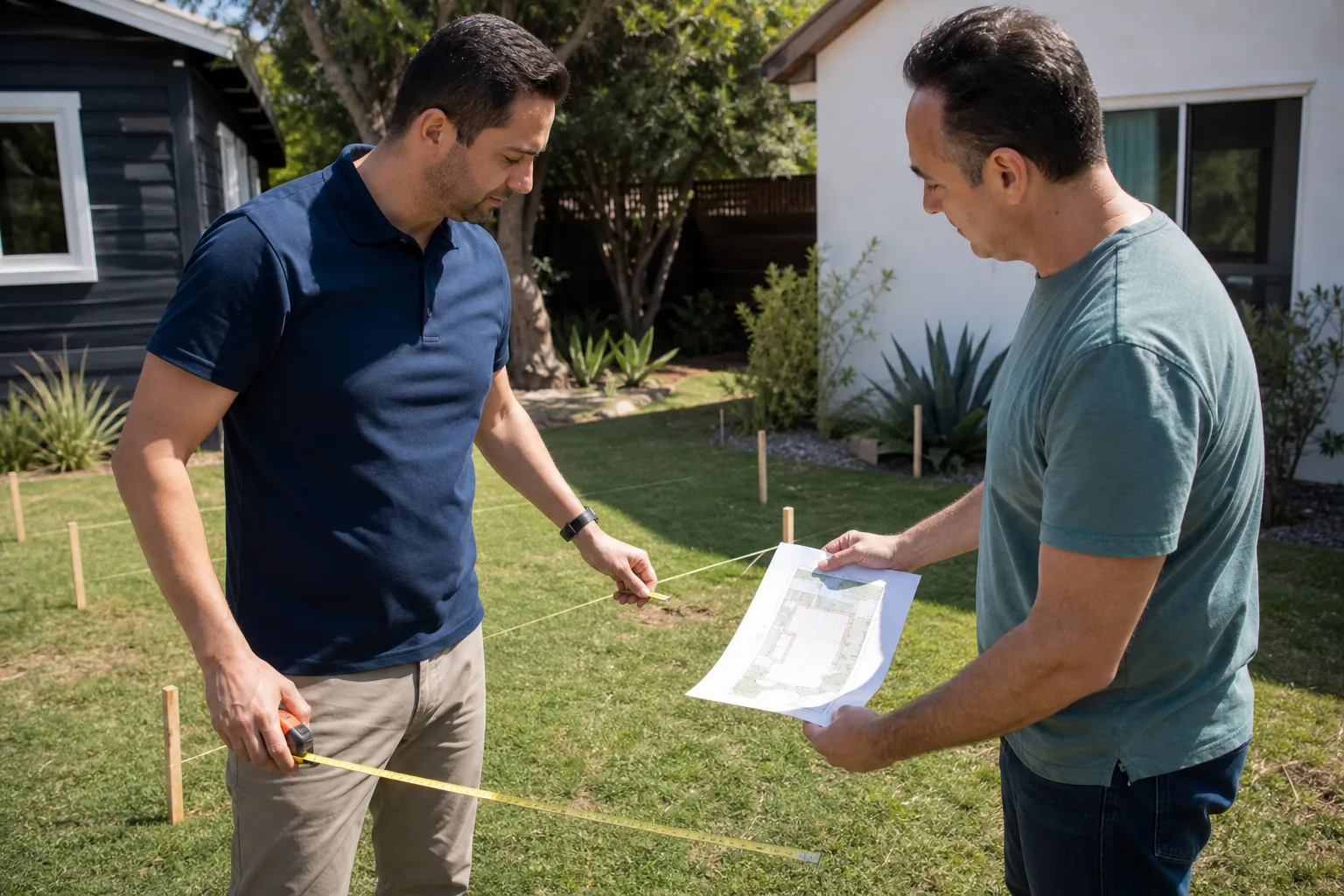
The gap between those two columns is real, and it’s the single biggest reason timelines published for Las Vegas or Henderson don’t transfer here. We plan pre-construction around the two-step process rather than being surprised by it. That’s what our new detached ADU in Boulder City work is built on, and it’s why we can give you a written price and a realistic schedule before you sign anything.
Where the historic townsite adds weeks you won’t see coming
The original townsite grid was platted in the 1930s, and the lots reflect it. Most homes are single-story bungalows and mid-century ranches on narrow parcels, many with detached garages or carports facing a rear alley. If you’re adding an ADU, you’re usually converting or replacing one of those accessory structures rather than building on open ground. That changes the design, the review, and the calendar.
Two timing risks come with it.
The first is design review. If your lot sits in the historic-character zone, your plans go before a design review committee that meets on a monthly schedule. Miss the submission deadline by a week and you wait a full month for the next meeting. Do that twice and you’ve lost 4 to 6 weeks without a single inspector ever looking at your foundation. Contractors who know the local calendar build the submission date into the plan from day one. Out-of-town crews usually find out about it after the fact.
The second is alley access. Those original shared rear driveways are narrow, and an alley easement can limit where a new unit can physically sit. Sometimes the answer is a smaller footprint. Sometimes it’s rotating the structure. Occasionally it means the prefab model you liked won’t fit the lot, and you need a different product line. Better to learn that during design than after the slab is poured.
This is also where brand choice matters. A Tuff Shed conversion of an existing garage sidesteps a lot of the ground-up siting question. A ground-up prefab from Cover or Abodu gives you a tighter, more predictable footprint but has to clear the setback and easement math on a narrow lot. We work through both directions with you and tell you honestly which one your parcel supports.
Prefab saves time on site and spends it at the factory
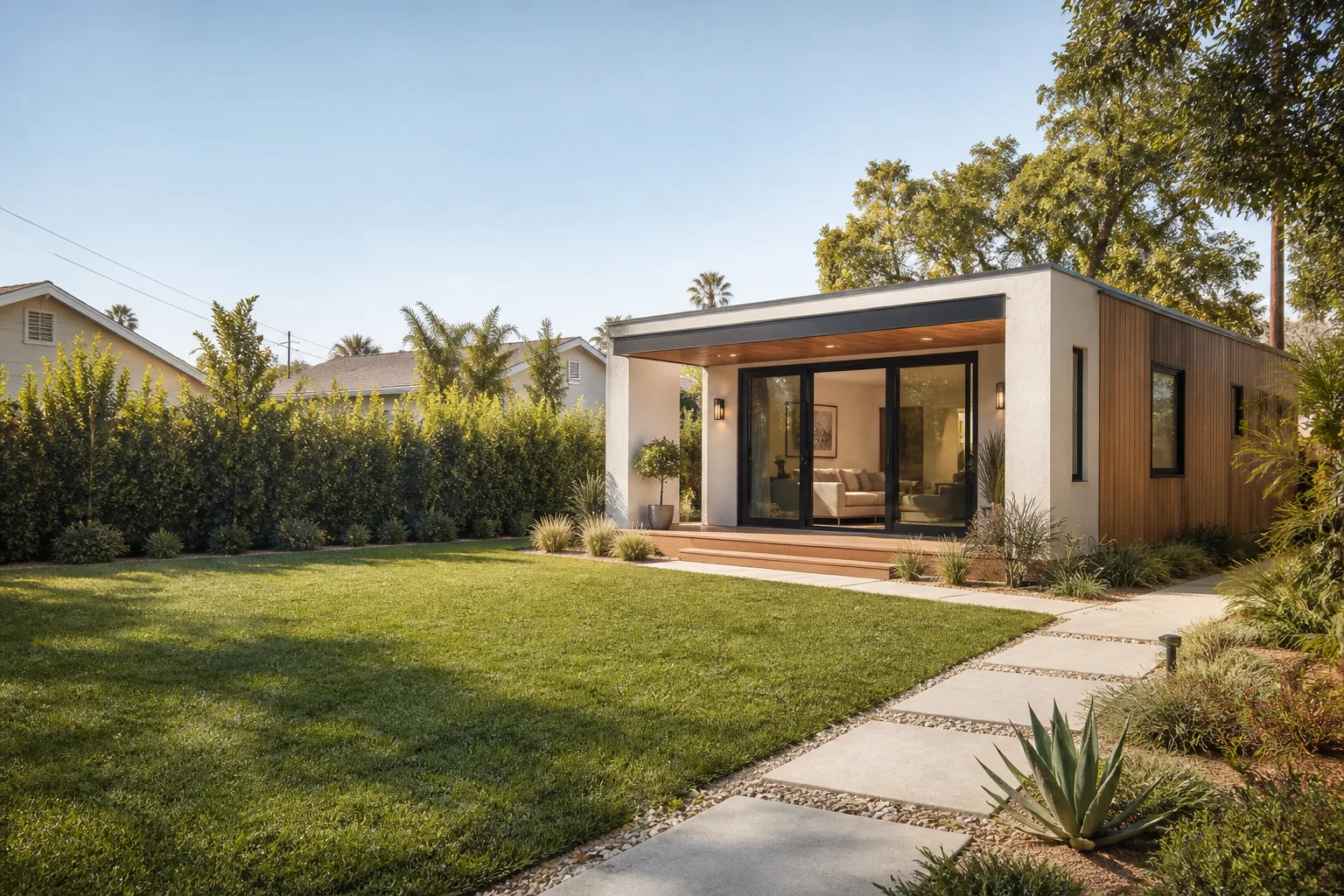
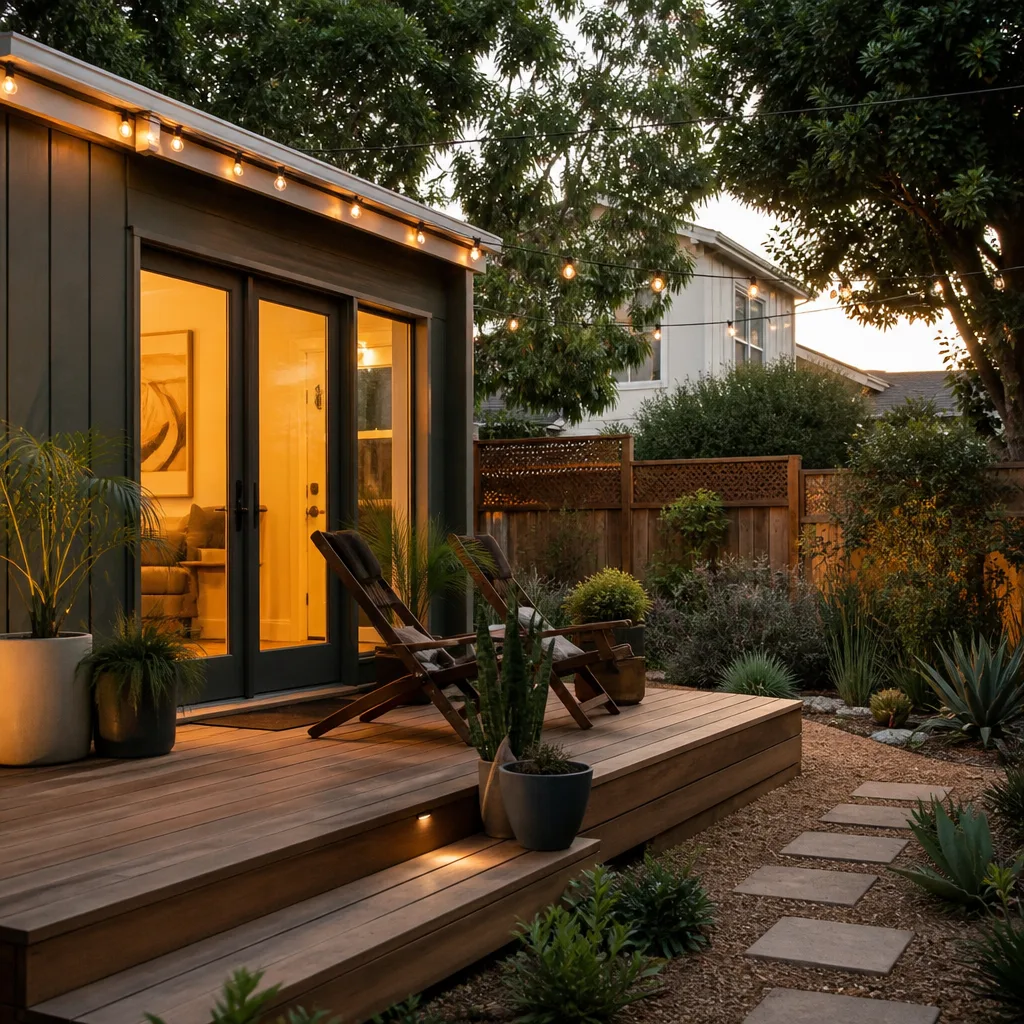
Modular and prefab ADUs from brands like Cover, Dvele, Plant Prefab, and Mighty Buildings cut on-site construction by 6 to 10 weeks compared with a stick-built addition. That’s a genuine advantage in a desert climate, because it means less time with an open roof and exposed framing in 105-degree heat.
The time doesn’t disappear, though. It moves. Factory lead time runs 12 to 20 weeks from order to delivery, and that period has to be sequenced correctly. Critically, the factory order can’t be placed until Boulder City planning approval is in hand. Order too early and you own a unit you can’t legally site. Order too late and you’re paying for a crew to sit idle.
Here’s how the two paths actually compare end to end:
- Site-built addition: 10-18 weeks permits, then roughly 6-10 months of on-site construction, and you’re more exposed to monsoon weather during framing and finishing.
- Prefab or modular unit: 10-18 weeks permits, then 12-20 weeks factory lead time running alongside site prep, then 3-6 weeks on site for foundation, set, and utility connections.
A site-built ADU in this size range typically runs $180,000 to $320,000 before site work, and prefab pricing lands in a similar band depending on the model and utility runs. The schedules converge more than most people expect. The difference is where the risk sits. For a lot in Boulder City’s original townsite, the prefab path often wins because the factory takes the weather out of the critical path.
Why the desert calendar matters more than the calendar on the wall
Boulder City sits in the Mojave at about 2,500 feet, with summer highs regularly over 105°F. That heat changes how you schedule work, not just how hard the crew works.
Concrete cures fast and unpredictably in that kind of sun, so a slab pour needs to happen early in the morning or wait for a cooler stretch. Stucco and exterior finish work dry too quickly to apply cleanly in direct afternoon heat, which pushes application to shaded sides or early hours. Then July through September brings monsoon season: flash-flood risk and humidity that make exterior finishes behave differently than they do in the dry months. Scheduling a pour or a stucco job inside that window means building in weather contingency days, and a plan that doesn’t carry those days turns into a scramble.
We build the contingency in up front rather than treating a rain day as a crisis. That’s what a schedule is for.
Our technicians have up to 20 years of experience working in this climate, and the project is governed by the 365-Day Done Right Promise: if the workmanship isn’t right within a full calendar year of completion, we make it right. You also get a written price before any work begins, and a free second visit if any element fails. No haggling, no fee. Every technician is background-checked and identity-verified, and their name and photo reach you before they arrive. When you’re home alone or managing a build around young kids, knowing exactly who’s at the door matters as much as knowing the schedule. If you’d like to see the wider picture of how we handle a full build, start at our home page.
What actually compresses a Boulder City ADU timeline
Since we can’t move the planning calendar, the useful question is where time can genuinely be recovered. In our experience on these lots, three moves matter most.
Submit design review early and completely. The single biggest avoidable delay is missing a monthly committee meeting. Getting the package in ahead of the deadline buys you a month you’d otherwise lose.
Place the factory order only after planning clears. This sounds obvious, but the temptation to shave lead time by ordering early creates a much worse problem if the siting changes during review.
Lock finishes before the permit is issued. James Hardie cladding selections, window specifications, and cooling equipment sizing are all review items. Deciding them under review rather than after adds weeks of back-and-forth. And in a town where a well-chosen ADU adds a second household’s worth of living space to a lot that was platted before modern setbacks, the case for getting it right the first time is strong.
Same-day communication is the other lever. Permit status updates, inspection scheduling, and weather-delay calls get answered by a live person 24/7. When a scheduling decision has to be made the same day it comes up, you’re not waiting on a voicemail tree.
FAQs
Expect 8 to 14 months from planning application to move-in. Permits alone run 10 to 18 weeks because planning and building are reviewed separately, then construction takes 6 to 10 months for a site-built unit or 3 to 6 weeks on site for a prefab once the factory delivers. Call (888) 296-0055 with your address and we’ll map the sequence for your lot.
Often yes, but the layout has to work around the alley easement and the original setback pattern. The unit may need a smaller footprint or a rotated placement, which is why we resolve siting during design rather than after permits. Call us for a site review before you fall in love with a floor plan.
A garage conversion is usually faster because there’s no new foundation pour and the structure already exists, though it depends on the condition of that 1930s or 1950s garage. Ground-up prefab from Cover or Plant Prefab can match it once you account for the 12 to 20 week factory lead. Call (888) 296-0055 and we’ll tell you which path your lot supports.
Not if the schedule carries contingency days from the start. We plan slab pours and exterior finishes around the July through September window rather than booking them into it. A schedule built without those buffers is the one that slips. Call us for a written timeline you can actually plan around.
If you’d rather have your lot and timeline looked at properly, Sutton ADU Builders Boulder City offers a no-pressure assessment in Boulder City. We’ll give you a written price before anything starts and a schedule built for this town. Call (888) 296-0055 for a free estimate.
Written by the team at Sutton ADU Builders Boulder City, serving Boulder City, NV.