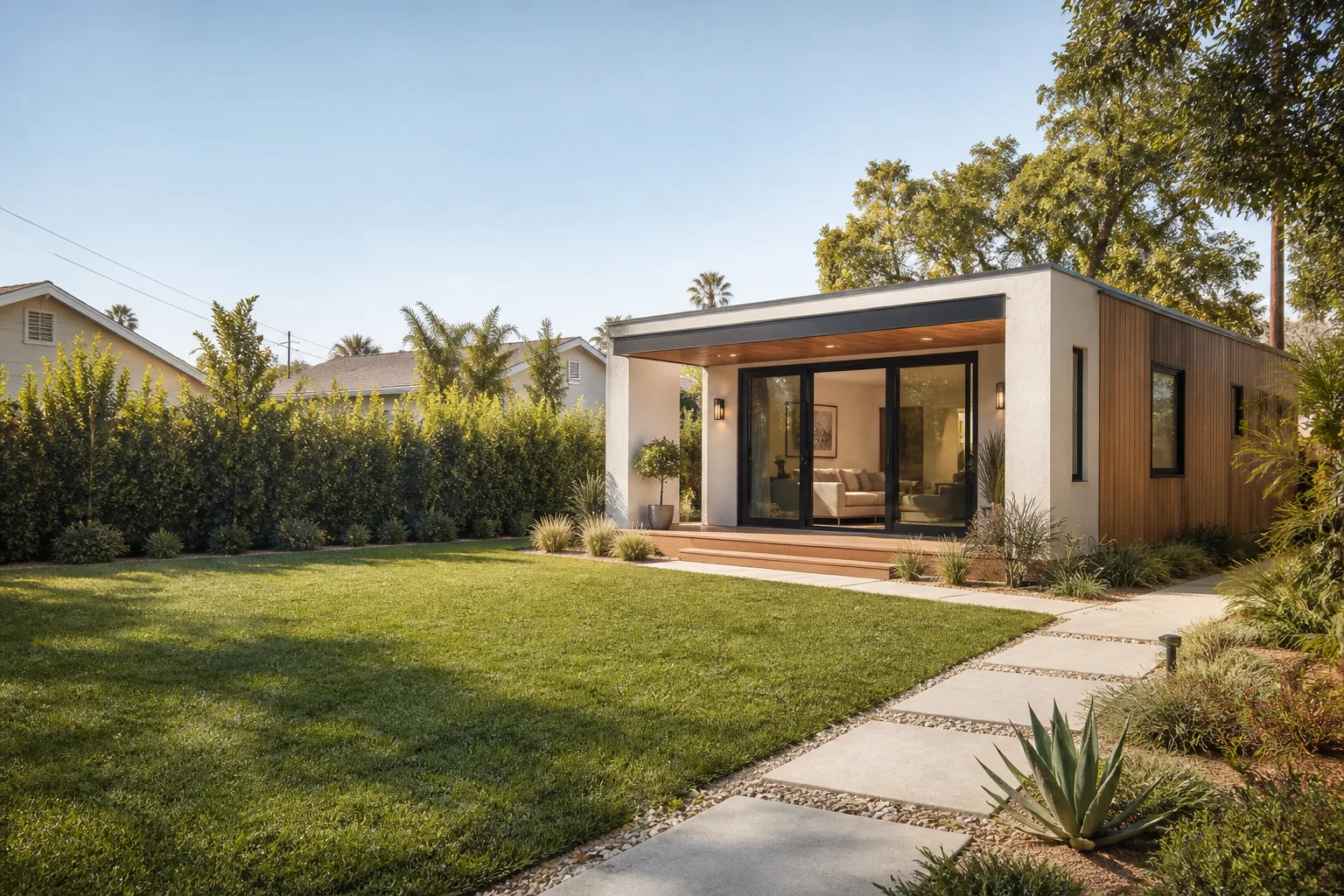

Why Boulder City Homeowners Choose Abodu ADU
Sutton ADU Builders Boulder City provides independent Abodu ADU service for owners across Boulder City, including site assessment, foundation and grading work, and prefab ADU installation. We work as an independent Abodu service provider, which means we are not affiliated with or authorized by Abodu. What sets our Abodu work apart is that we already know how Abodu’s panelized shell, mechanical penetrations and finish systems go together, and we know where the factory detailing needs adapting for Boulder City’s very different building code, soils and desert heat. Call (888) 296-0055 for a free estimate.
Abodu builds its units around California’s Title 24 energy rules. That’s a real engineering advantage, and it’s also the reason a factory unit dropped onto a Boulder City lot without a local eye can develop problems no factory manual warns you about. Our credibility here comes from taking Abodu’s prefab assembly sequence and site-prep demands apart on real installs, not from any factory endorsement. The units are good. The gap between a California-spec build and a Nevada site is where the trouble lives, and that gap is what we close.
Boulder City adds its own layer. The town still enforces its own building codes and zoning outside Clark County jurisdiction, and most of the original townsite was platted in the 1930s through the 1950s ahead of modern setbacks. An Abodu unit has to fit a lot that was drawn for a bungalow and a rear-alley garage, not a modern accessory dwelling. Getting that right starts before a single panel is landed.
Why Trust Sutton ADU Builders Boulder City for Your Abodu ADU?
Our technicians have up to 20 years of experience, and that experience includes Abodu’s specific assemblies: how the wall modules are set, how the floor and subfloor layers handle movement, and how the factory-installed mini-split and heat-recovery ventilator (HRV) penetrations were detailed. We translate trade terms as we go, so you understand what’s being corrected and why. A structural term like foundation flatness tolerance matters to you because it’s the difference between a unit that stays tight and one that cracks at the seams within a year.
We use OEM-compatible parts where Abodu’s proprietary components matter and rated equivalents where they don’t. Every job is governed by The Threshold Standard: every technician is background-checked, identity-verified, uniformed and photo-badged, with their name and photo sent to you before they arrive. You get a written price before any work begins, and the 365-Day Done Right Promise covers defects in workmanship for a full calendar year from completion. If something we touched fails inside that year, we come back at no charge. Warranty-safe practice means we don’t cut into a factory assembly to save an hour; we correct the site conditions the assembly depends on.
Common Abodu ADU Problems We Fix in Boulder City
These are the failures we actually see on Abodu installs in this climate and on these lots. Each one has a cause, and the cause is almost always upstream of the symptom.
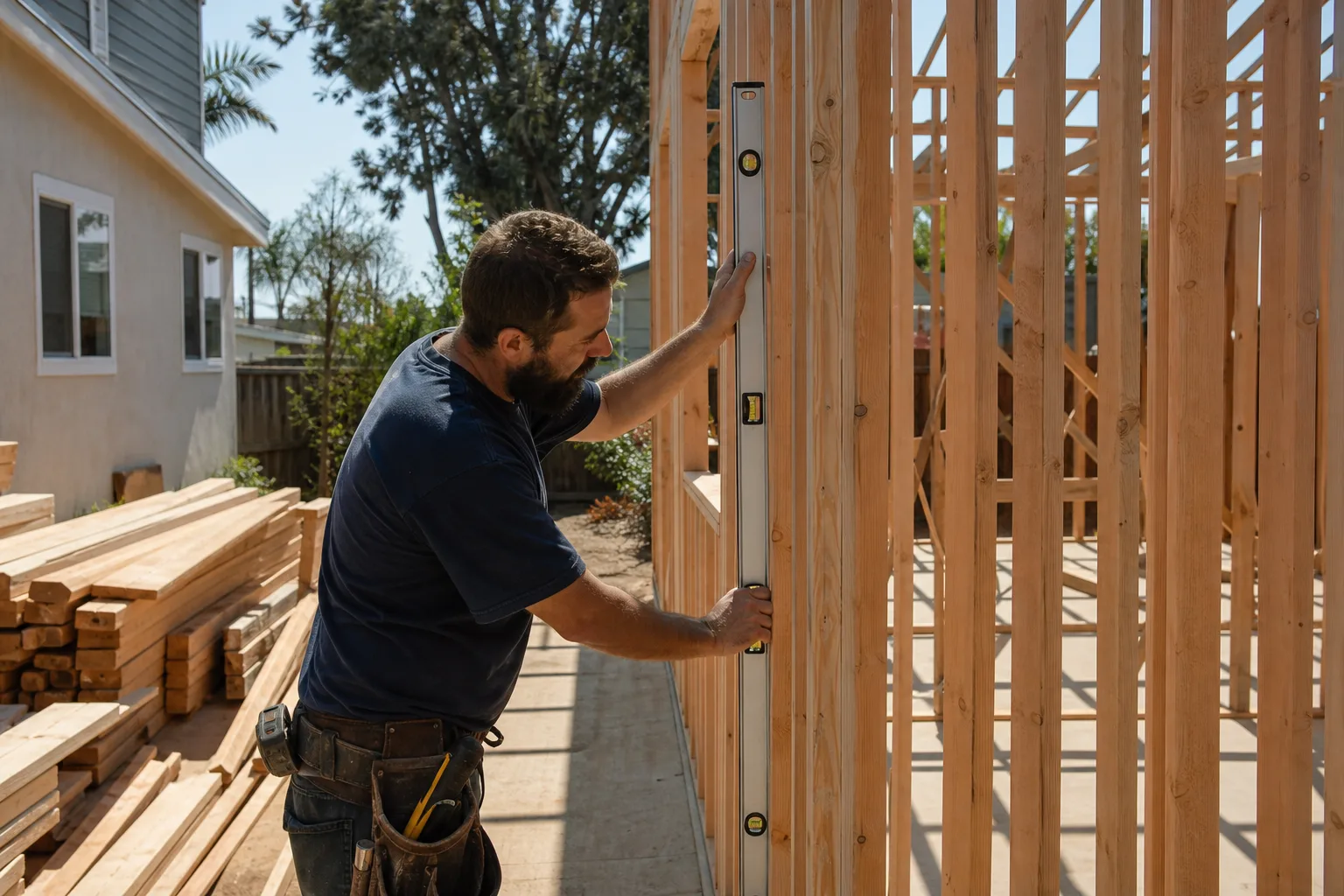
- Panel-joint misalignment and gapping on the 500 and 610. Abodu’s wall modules ship as panels and get set onto a site-built foundation. If that foundation wasn’t poured to Abodu’s flatness tolerance, the panels land slightly off and the joints open, which shows up as drywall cracks and air infiltration at the seams. In a Boulder City summer, that seam becomes a heat leak you can feel with your hand.
- Mini-split and HRV penetration failures in desert heat and dust. Abodu’s factory through-wall mini-split and HRV penetrations were sealed to California Title 24 detail. Boulder City sits in the Mojave at roughly 2,500 feet, with 105°F-plus summers and monsoon dust storms. Those seals underperform here, and you get condensation staining around the penetration and filters loading far faster than the manual suggests. This is the single most common Abodu call we get in Boulder City, and the fix is re-sealing to a desert-rated detail plus a realistic filter schedule.
- Electrical rough-in and panel sizing that needs re-verification. Abodu sets its electrical rough-in and panel sizing for California code paths. Before the factory panel ties into your site service, we re-run the load calculation against Nevada requirements and confirm the utility interconnect. If the service can’t carry the unit as configured, we find out before the meter is involved, not after.
- Floor and subfloor telegraphing on expansive soils. Southern Nevada’s expansive soils and caliche (a hard calcium-carbonate layer under the surface) move with moisture. When the foundation or grading wasn’t engineered for it, the factory floor assembly transmits that movement upward. The symptom is doors that swing or rack, and finish lines that won’t stay straight.
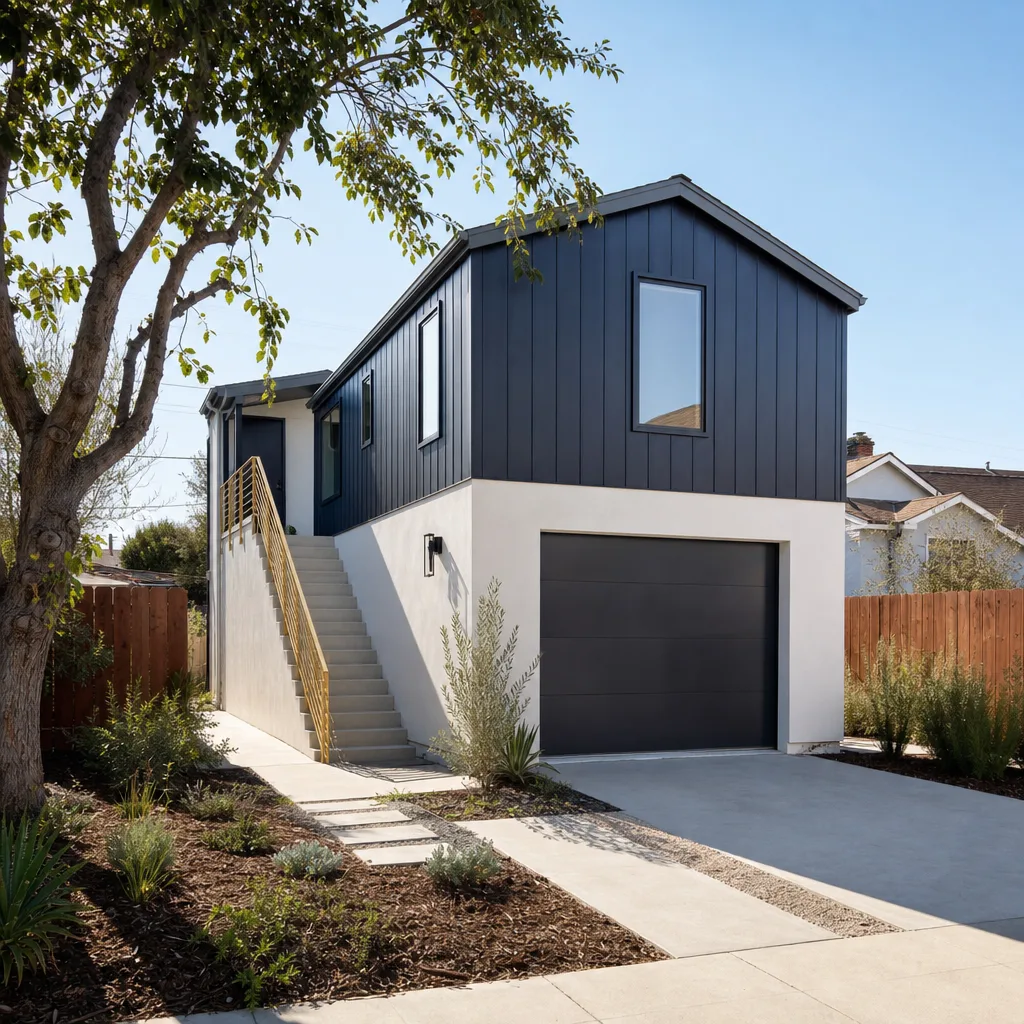
- Garage-conversion placement problems. Many original Boulder City lots have alley-facing garages with shared rear driveways. An Abodu garage-conversion build has to land inside a narrow alley easement and often inside historic-district review, which limits where the unit can sit. We survey the easement and the review path early, because moving a unit after set is a far more expensive correction than placing it right.
Abodu Parts & Our Repair-vs-Replace Approach
Abodu’s shell, windows and mechanicals are proprietary enough that matching factory-spec components matters. Where a proprietary part has a rated equivalent, a quality aftermarket match is the right call: filters, HRV cores, mini-split controls, fasteners and sealants are all parts where the rating matters more than the label. Where the part is structural or shell paneling, we don’t substitute. We source parts per job against the specific unit and the correction needed, and we don’t claim to hold local stock we don’t have. That means an honest lead time, quoted up front.
Repair beats replacement for most seam and finish issues. A cracked seam is a symptom of foundation flatness, not a bad panel, so correcting the base and re-finishing the joint is the durable fix. Where structure or shell paneling is damaged, we repair it properly rather than patching over it. If a unit is genuinely at the end of its service life, we’ll tell you plainly, with the numbers behind the recommendation. A written price comes before any work starts.
Call (888) 296-0055 to schedule a free assessment of your Abodu unit. We’ll tell you what needs correcting and what doesn’t.
Our Abodu Service Process – Step by Step
- 1
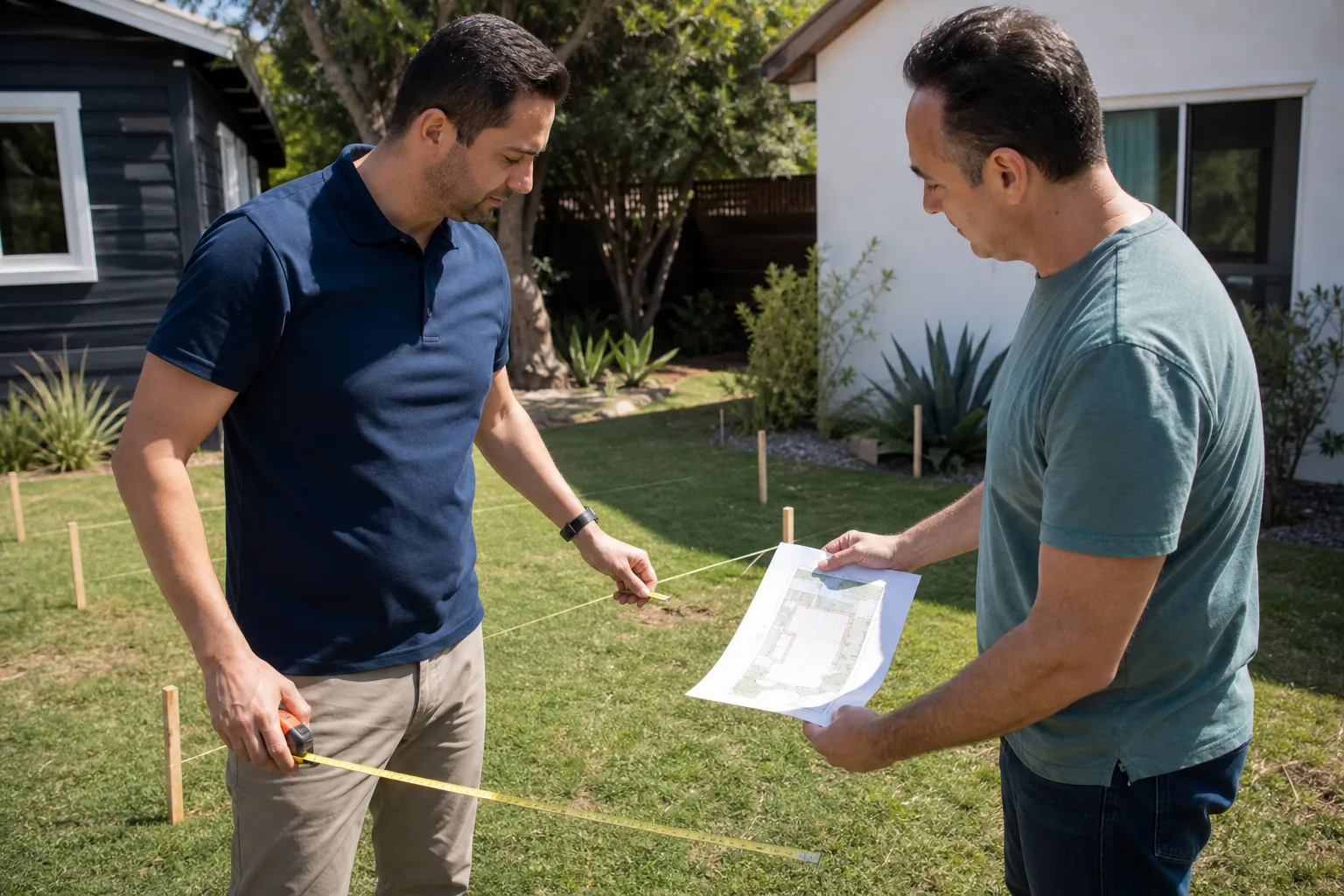
Diagnosis and site survey. We inspect the unit and the ground under it: seam condition, door swing, penetration seals, panel flatness against Abodu’s tolerance. Then we survey the lot, including alley access, setback lines and grading. Most Abodu problems start here, and correcting them starts here too.
- 2
Written price before work. You get a line-item price covering the corrections, the materials and the schedule. No surprise invoices and no scope creep passed silently onto the bill.
- 3
Repair, foundation correction or installation. We correct grading and foundation flatness before any set, re-seal penetrations to a desert-rated detail, and re-verify the electrical tie-in against Nevada load calculations and the utility interconnect.
- 4
Test and verify. We pressure-check the seals, run the mini-split and HRV, confirm the panel tie-in, and walk the door swings and finish lines with you.
- 5
Warranty and follow-up. The 365-Day Done Right Promise covers our workmanship for a full calendar year. If a repair or an element of the build fails inside that window, we return at no charge.
A typical Abodu job starts with a homeowner who has a unit on order and a site nobody has evaluated against Abodu’s foundation and crane-set requirements. Usually the pad was poured to a generic flatness spec. After the panels land and the unit is buttoned up, seams open, doors rack, and the mini-split and HRV penetrations start leaking dust and heat. A qualified local pro re-surveys the site, corrects grading and foundation before set, then re-seals and re-verifies the mechanical and electrical tie-ins to Nevada code. That’s the sequence we follow in Boulder City, because skipping any step in it just moves the cost downstream.
Abodu Products We Service & Install in Boulder City
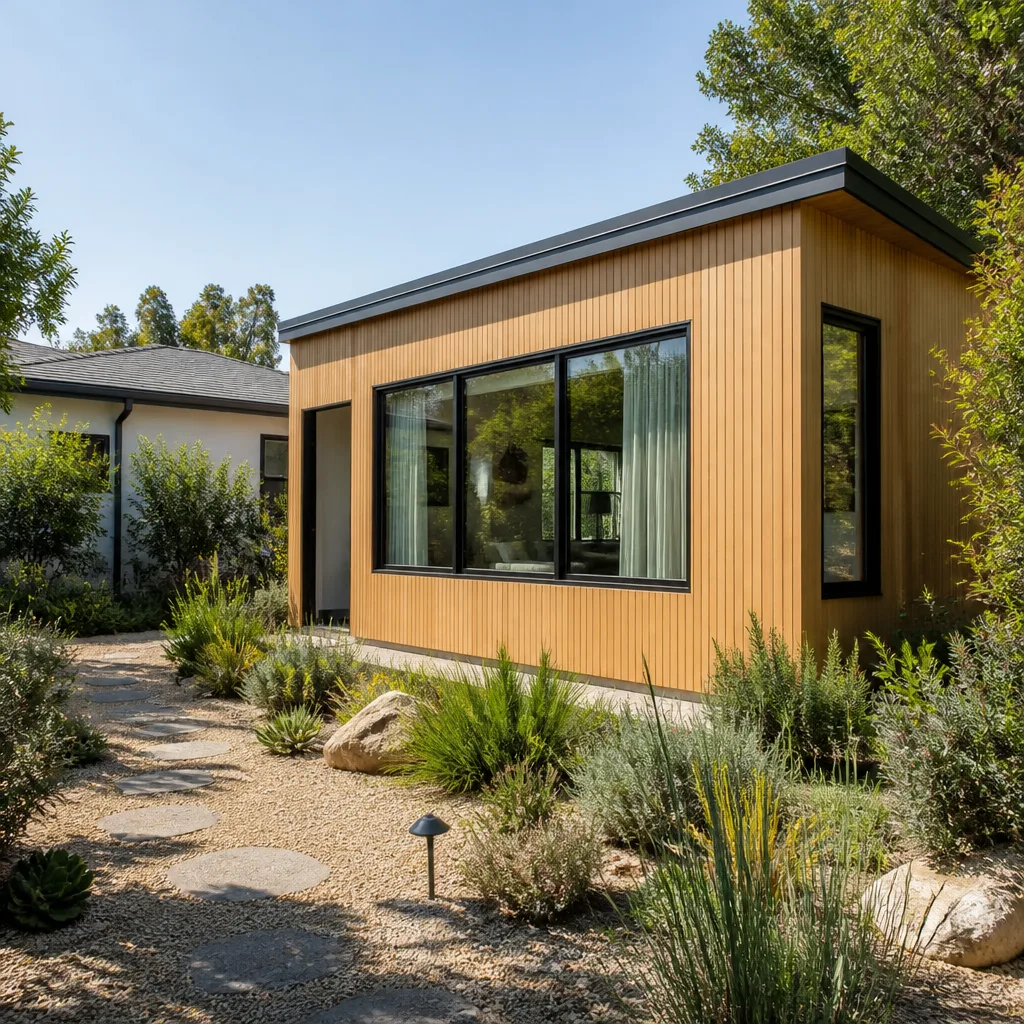
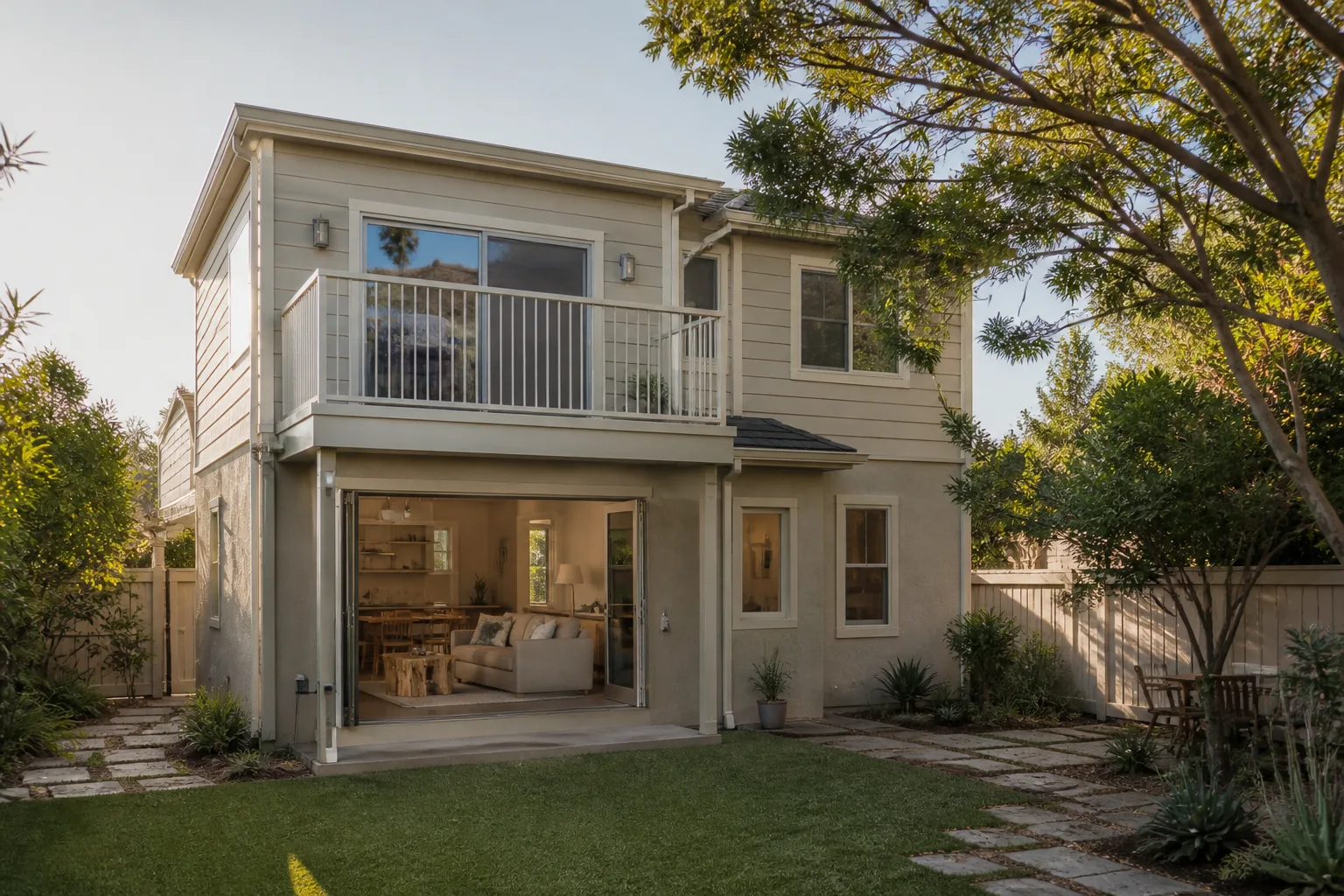
We service and install the Abodu 500, a studio at roughly 500 square feet; the Abodu 610, a one-bedroom; the Abodu 750, a two-bedroom; and Abodu’s detached garage-conversion build. Each has its own site-prep demands. The 500 and 610 are the models where seam and penetration issues show up most often, simply because they’re the most common units on order. The 750’s larger panel count makes foundation flatness matter more. The garage-conversion build carries the extra weight of easement and historic-review placement, which is why we survey before we quote. We handle site assessment, foundation and grading, and prefab installation for all of them in Boulder City.
We Also Service These Brands
Sutton ADU Builders Boulder City isn’t a single-brand shop. We also service Cover and Dvele units, along with other prefab and modular ADU brands including Mighty Buildings, Plant Prefab and Boxabl, plus Tuff Shed structures and James Hardie exterior systems. If your unit is one of those, the same process applies: diagnosis, a written price, warranty-safe corrections and the 365-Day Done Right Promise. That matters if your plans change mid-project or you own more than one structure on the lot. Call (888) 296-0055 and we’ll confirm coverage.
FAQs – Abodu ADU Service in Boulder City
No. We are an independent Abodu service provider and are not affiliated with or authorized by Abodu. Our Abodu knowledge comes from working on the units on real installs, which means we know the assemblies firsthand but we cannot act on Abodu’s behalf for factory warranty claims. Call (888) 296-0055 for a free assessment.
We use genuine OEM-compatible parts for structural and shell components, and rated equivalents for parts where the rating matters more than the label. That includes filters, HRV cores, mini-split controls, fasteners and sealants. Parts are sourced per job, since we don’t hold local stock, and the written price shows the lead time.
No. Abodu builds to California Title 24 rules, and Boulder City enforces its own building codes outside Clark County jurisdiction under the IECC-based requirements Nevada uses. A California-spec unit does not automatically comply, and the difference shows up in the building envelope, mechanical verification and the electrical load calculation. We map the unit’s detailing onto the local code path and confirm what needs adjusting before the set. Call (888) 296-0055 for a free estimate on that assessment.
Not safely. Abodu’s wall modules require a foundation built to the factory’s flatness tolerance, and a standard slab poured to a generic spec usually isn’t. The typical result is panel-joint gapping, drywall cracks and doors that rack. Southern Nevada’s expansive soils and caliche make the grading and foundation engineering more important, not less. Call (888) 296-0055 and we’ll check your site before you pour.
That gets caught before delivery if the site was surveyed properly. Abodu sets its electrical rough-in and panel sizing for California code paths, and those need re-verification against Nevada load calculations and the utility interconnect. If your service can’t carry the unit as configured, the options are a service upgrade or a smaller configuration, and we price both in writing before anything is ordered. Call (888) 296-0055 for an estimate.
They need upgrading. Abodu’s through-wall mini-split and HRV penetrations are sealed to a California Title 24 detail, and that detail underperforms in 105°F-plus heat and monsoon dust. You’ll see condensation staining around the penetration and filters loading fast. Re-sealing to a desert-rated detail and setting a realistic filter schedule solves most of it. Call (888) 296-0055 for an estimate.
Yes, and it’s a common approach here, but placement is the hard part. Many original townsite lots have 1930s alley-facing garages with shared rear driveways, which means a narrow alley easement and often historic-district design review limit where the unit can sit. We survey the easement and the review path early, because placing it right up front costs far less than moving it after set. Call (888) 296-0055 for a free assessment.
It depends on the correction. Re-sealing penetrations and re-finishing seams is typically a short visit, while foundation correction or an electrical upgrade is a longer scope. You get the schedule in writing with the price, and we don’t move it on you mid-job. Call (888) 296-0055 for an estimate.
Working on a unit with a qualified contractor doesn’t void the factory warranty by itself, but how the work is done matters. We correct site conditions and re-seal to desert-rated detail rather than cutting into factory assemblies to save time, and we document what was done so your records are clean if a claim ever comes up. Call (888) 296-0055 to talk through your situation.
Service and correction work typically falls into a few bands. Penetration re-sealing and seam re-finishing usually runs $600 – $1,800 depending on how many penetrations and how far the joints have opened. Foundation and grading correction before set runs $8,000 – $25,000 depending on soil conditions and access. Electrical re-verification and service upgrade ranges from $1,500 to $12,000. A full installation assessment and set coordination is quoted per project against the unit’s requirements. Call (888) 296-0055 for an exact quote – estimates are free.
Book Your Abodu Service in Boulder City, NV
Whether you’ve got an Abodu 500, 610 or 750 on order or a unit already sitting on a foundation that needs correcting, the first step is the same: a free assessment and a written price before any work begins. We serve homeowners across Boulder City with site assessment, foundation and grading work and prefab installation, all under The Threshold Standard. Call (888) 296-0055 to schedule your free estimate. A live person answers every call, so you won’t land in a voicemail queue.
Written by the team at Sutton ADU Builders Boulder City.