Last updated November 18, 2026
Choosing the Right ADU Brand: A Buyer’s Guide for Boulder City
Several prefab ADU brands marketed aggressively in California cannot legally install in Boulder City without engineering modifications, because their standard insulation packages don’t meet Nevada’s energy code for desert climate zones. That single fact reshapes the entire “which brand?” question. In Boulder City, choosing an ADU brand isn’t a national comparison exercise. It’s a local one, governed by Climate Zone 3B performance rules, Boulder City Power utility requirements, and small-lot site conditions that most brand sales pages never mention. This guide walks you through what actually matters here: which systems install as-spec, what to ask before you sign, and how to weigh a branded prefab against a contractor-designed site-built ADU on the same four criteria.
Quick Answer
The best ADU brand for a Boulder City lot is the one whose standard engineering package already meets Nevada’s Climate Zone 3B energy code, whose foundation and metering plan works with Boulder City Power utility requirements, and whose warranty is enforceable through a local builder. For most Boulder City homeowners, that means narrowing the field to two or three brands with desert-rated assemblies, or choosing a site-built design package where customization and local permitting track record matter more than factory speed.
Table of Contents
- Why Nevada’s Climate Zone 3B Narrows the Brand Field
- What to Ask Any ADU Brand About Boulder City Power Compatibility
- Prefab Speed vs. Site-Built Customization on Small Boulder City Lots
- Which National ADU Brand Warranties Are Actually Enforceable
- How to Evaluate a Site-Built ADU Against a Branded Prefab Product
- Brand-by-Brand Notes: Abodu, Cover, Dvele, and Mighty Buildings
- The Questions to Ask Before You Sign a Purchase Agreement
Why Nevada’s Climate Zone 3B Narrows the Brand Field
Nevada puts Boulder City in Climate Zone 3B: hot and dry. That classification drives minimum insulation R-values, window solar heat gain coefficients, and roof assembly requirements under the state energy code. A prefab ADU engineered for the Pacific Northwest or coastal California is built to a different thermal envelope. Its walls might be fine, but its roof, glazing, and mechanical plan often fall short of what 3B demands, especially when summer design temperatures push past 110°F.
Here’s what that means in practice. A brand whose factory-standard package clears Zone 3B can usually install as-spec, with a foundation plan adapted to local soil and grading. A brand that doesn’t clear 3B needs an engineering amendment: added insulation, upgraded glazing, sometimes a different HVAC spec. Those amendments get priced as change orders, and they can add weeks to the schedule while a local engineer stamps revised drawings. In our experience, homeowners comparing brand quotes side-by-side often don’t realize one number already includes desert-rated upgrades and the other doesn’t.
Before you tour a factory or visit a model, ask three questions:
- What climate zone is your standard assembly rated for, and can you send the stamped energy compliance documentation?
- If the standard package doesn’t meet Zone 3B, what does the amendment cost and who pays for the engineering?
- Which window and glazing specs are included as standard, and what’s the solar heat gain coefficient?
Boulder City’s desert exposure isn’t a marketing detail. It’s a code threshold that changes which brands are realistic and which quotes are honest. When you’re ready to compare options on your actual lot, our ADU Builders in Boulder City page walks through the local process.
What to Ask Any ADU Brand About Boulder City Power Compatibility
Boulder City runs its own municipal electric utility, Boulder City Power, which means the interconnection process for a new ADU doesn’t follow the same path as a Clark County address served by a larger utility. Panel capacity, metering configuration, and service-drop requirements all get reviewed locally, and an ADU brand whose standard package assumes a 200-amp panel may not fit a Boulder City home still running 100 amps.
Ask these questions before signing:
- Panel capacity: Does the standard ADU package require a service upgrade, and does the purchase price include it?
- Metering: Is the ADU designed for a separate meter or a sub-panel off the main? Boulder City practice affects which is simpler and more affordable.
- Service drop and trenching: How far is the ADU from the existing service, and who handles the trench and conduit if a new run is needed?
- Solar readiness: If you plan to add panels later, does the ADU’s electrical plan leave conduit and breaker space for it?
One more local wrinkle: the historic core of Boulder City has older service equipment that may need replacement regardless of the ADU brand you pick. A brand that handles this in its site assessment will flag it early. A brand that doesn’t may leave it to your contractor mid-build.
Prefab Speed vs. Site-Built Customization on Small Boulder City Lots
Prefab ADU marketing leans hard on speed: six weeks, eight weeks, install day is one crane lift. Some of that is real. Most of it is conditional on a lot that accepts a crane, a foundation that’s already poured and cured, and a utility trench that’s already run. On the smaller lots common in Boulder City’s older residential blocks, those conditions often take longer than the factory build itself.
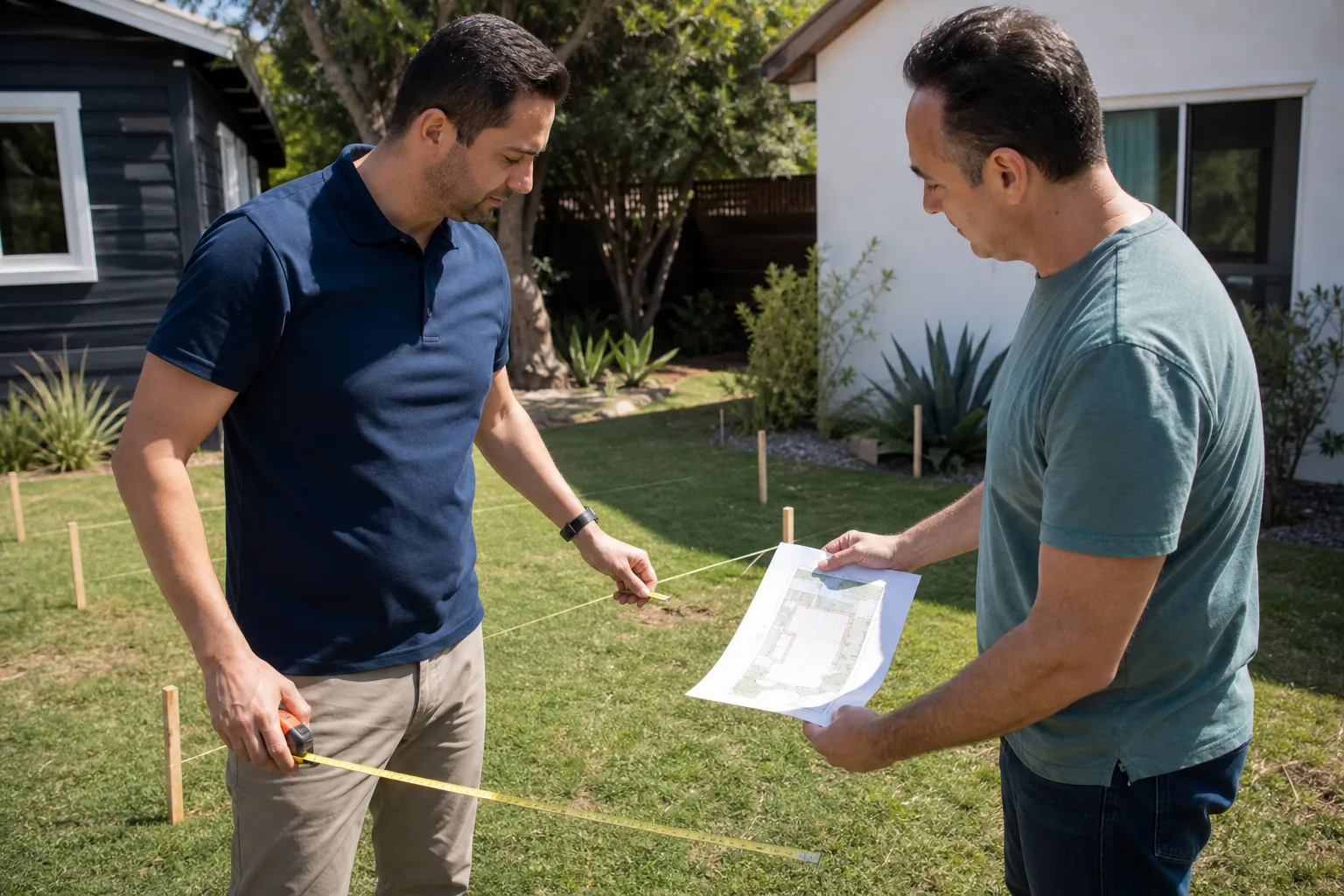
Foundation prep on sloping or tight lots can add weeks. A crane needs truck access and swing clearance. Setbacks between the ADU and the property line, plus the need to keep a fire-access path, sometimes force a custom footprint that a standard prefab module can’t hit. When that happens, the “speed” advantage evaporates: the factory module doesn’t fit, and the project pivots to a site-built design anyway.
A fair comparison looks like this:
- Prefab wins on flat, accessible lots where the standard footprint fits setbacks and the crane can reach the pad.
- Site-built wins on tight, sloped, or heavily constrained lots, and where the homeowner wants a specific roofline, material palette, or interior layout the factory modules don’t offer.
- Hybrid options (panelized walls, modular shells finished on-site) can capture some of both, at a price premium.
Boulder City’s lot geometry is often the deciding factor. If you’re weighing a room addition instead of a detached unit, our Room Addition Contractor in Boulder City guide covers the trade-offs.
Which National ADU Brand Warranties Are Actually Enforceable
A national ADU brand’s warranty looks impressive on paper: ten years on the shell, five on systems, a long list of exclusions. The question that matters in Boulder City is who shows up when something fails and who pays for the trip. If the manufacturer is in California or Oregon and the installer is a local subcontractor, the warranty chain can snap in the middle, and you’re left calling two companies who each point at the other.
Before you sign, ask:
- Who performs warranty service? Get a name, a company, and a response-time commitment in writing.
- Is the installer’s work covered separately from the manufacturer’s? Factory warranty rarely covers foundation, utility connections, or finish work.
- What voids the warranty? Site-built modifications, owner-installed fixtures, and non-approved repairs often do.
- Is there a workmanship warranty from the builder? This is the piece that protects you when an element of the build fails, not just when a factory part does.
This is where a written workmanship guarantee matters more than a brand logo. Our projects carry the 365-Day Done Right Promise: defects in workmanship are covered for one full calendar year from project completion, and if a repair or element of the build fails, a second visit is included at no fee. A prefab brand’s warranty protects the module. A builder’s workmanship warranty protects the install, the foundation, the utility tie-ins, and the finish work. You need both.
How to Evaluate a Site-Built ADU Against a Branded Prefab Product
You can compare a contractor-designed site-built ADU against a branded prefab product using the same four criteria. Do that, and the decision becomes concrete instead of a mix of sales pitches.
- Thermal performance: Ask for the wall, roof, and glazing assembly specs in numbers and confirm they meet Climate Zone 3B. Both a site-built design and a prefab package should be able to produce stamped compliance documentation. If either can’t, that’s a red flag.
- Warranty coverage: Compare factory warranty, installer warranty, and workmanship warranty as three separate items. Note who performs service, where, and how quickly. A written workmanship guarantee with a defined term is worth more than a brand name.
- Permitting track record: Ask how many ADUs the contractor or brand has permitted in Boulder City or the surrounding Clark County area, and whether the drawings were approved on the first review. A local builder who’s navigated Boulder City review before will know which details draw comments.
- Price transparency: Compare line-item quotes, not totals. Scope creep, site work, utility upgrades, and finish allowances should appear as named lines in both quotes. A written price before work begins is the standard to hold both sides to.
Run the comparison with the same checklist on both sides. That’s the single most useful habit in this whole decision.
Brand-by-Brand Notes: Abodu, Cover, Dvele, and Mighty Buildings
We work with recognized ADU product lines including Abodu, Cover, Dvele, Mighty Buildings, Plant Prefab, and Boxabl, plus Tuff Shed conversions and James Hardie exterior systems. That experience is useful because each brand’s standard package has different strengths and different desert-adaptation needs.
- Abodu is known for a turnkey model and a simple product lineup, which shortens the design conversation. In Boulder City, the climate-rated assembly and the site-access plan are the two items to confirm before you commit.
- Cover focuses on compact footprints and modern materials, which can fit smaller lots well. Confirm the glazing specs and foundation plan for Zone 3B before signing.
- Dvele brings a strong high-performance envelope story, which often reduces the amount of amendment needed for desert conditions. Ask for the thermal documentation specific to your unit.
- Mighty Buildings uses panelized systems and modern materials, which can speed site assembly. Confirm local code acceptance of the panel system and the utility plan early.
None of these brands is right for every Boulder City lot. The right answer depends on your address, setbacks, utility service, and what you want the finished unit to look like. That’s the honest position, and it’s why a local builder familiar with each product line is worth having on your side.
The Questions to Ask Before You Sign a Purchase Agreement
Whether you’re buying from a prefab brand or commissioning a site-built ADU, the same questions determine whether the project goes smoothly. Ask them all, in writing, before you sign.
- Is your standard assembly rated for Climate Zone 3B, and can you provide stamped compliance documentation?
- Does the price include the foundation, utility trench, panel upgrade, and permits, or are those separate?
- Who pulls the permits, and who attends the inspections?
- Who performs warranty service, and how quickly will they respond?
- Is the workmanship warranty separate from the factory warranty, and what does it cover?
- What happens if the plan requires an engineering amendment after signing, and who pays for it?
- What is the schedule, and what site conditions could extend it?
Write the answers down. A written price and a named warranty term are the two documents that protect you most when a project hits an unexpected site condition.
Common Mistakes to Avoid
- Comparing total prices without comparing scopes. A brand quote that excludes foundation, utility, and permits can look cheaper than a builder quote that includes them. Line-item comparison is the only fair one.
- Assuming the factory warranty covers the install. Factory warranty rarely covers foundation, utility tie-ins, or finish work. Ask for a workmanship warranty separately.
- Skipping the utility assessment. A panel upgrade in Boulder City can add meaningful cost and weeks to the schedule. Get this checked before you sign.
- Assuming the crane has access. On tight Boulder City lots, a crane lift can be impossible or require a street permit and traffic control. Walk the lot with the contractor before finalizing a prefab choice.
- Ignoring the energy-code amendment risk. A brand that needs a desert engineering amendment may add weeks and cost. Ask for stamped Zone 3B documentation up front.
- Choosing on showroom appearance alone. The finish package matters, but the thermal envelope, warranty chain, and permitting track record matter more.
- Not confirming who attends inspections. Permits get pulled and inspections passed by someone. Make sure you know who that is and that it’s included.
When to Call a Professional
Call a professional when the lot is tight, sloped, or has utility constraints that don’t fit a standard prefab footprint. Call when you want a specific design that the factory modules don’t offer. Call when the prefab brand’s standard package doesn’t meet Climate Zone 3B and you need to understand the amendment cost. Call when you’re comparing a prefab quote and a site-built quote and want a line-item comparison that accounts for foundation, utility, and permitting. And call when the project has moved past “maybe” into “we’re doing this,” because the earlier the site assessment happens, the fewer surprises show up mid-build. Sutton ADU Builders Boulder City offers free estimates in Boulder City. Call (888) 296-0055 to schedule yours, and we’ll walk the lot with you before you commit to any brand.
Frequently Asked Questions
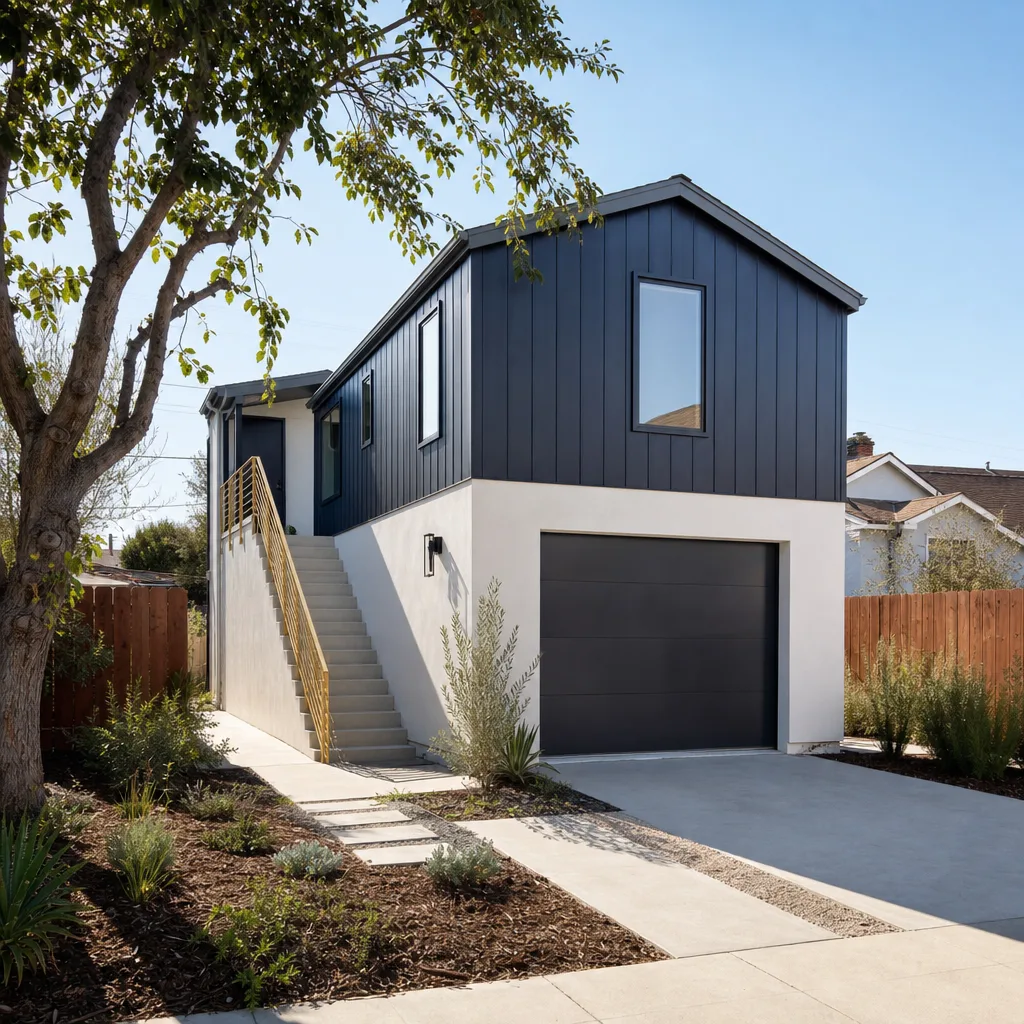
There’s no single best brand, but the right ones share a common trait: their standard assembly already meets Nevada’s Climate Zone 3B energy code, so they install as-spec without costly engineering amendments. For most Boulder City lots, narrow the field to two or three desert-rated brands, or consider a site-built design where customization and permitting track record matter more. Call (888) 296-0055 and we’ll help you compare on your actual lot.
Often yes, but not always as-spec. Many California-marketed prefab brands need an engineering amendment to meet Nevada’s Climate Zone 3B requirements, especially on roof assembly, glazing, and mechanical spec. Get the stamped energy compliance documentation before signing. If the brand can’t produce it, the quote isn’t comparable to one that can.
Often yes, especially in older homes in the historic core. ADUs with electric ranges, heat pumps, or EV chargers may need a 200-amp service, and Boulder City Power interconnection requirements may add a step. Have the site assessed before signing a purchase agreement so the upgrade is priced into the project, not added later.
Sometimes, and sometimes not. Prefab is faster when the lot is flat, accessible, and the standard footprint fits setbacks, so the foundation can be poured and cured before install day. On tight, sloped, or historic lots, foundation prep and site access often erase the speed advantage. Ask for the schedule with site conditions named.
The workmanship warranty. Factory warranty protects the module; the workmanship warranty protects the install, foundation, utility tie-ins, and finish work, which is where most problems show up. Our projects carry the 365-Day Done Right Promise, a written guarantee covering defects in workmanship for one full calendar year from completion. Ask any builder or brand for their workmanship term in writing.
Most detached ADUs in the 500 to 1,000 square-foot range run roughly $180,000 to $320,000 before site work, depending on brand, finish level, and utility scope. Site work can add meaningfully if the panel needs upgrading or the foundation requires extra prep. Call (888) 296-0055 for a line-item estimate with site work broken out separately.
The Bottom Line
Choosing an ADU brand in Boulder City is a local decision shaped by Climate Zone 3B energy code, Boulder City Power utility requirements, small-lot site conditions, and the enforceability of the warranty chain. The strongest position is to compare a prefab quote and a site-built quote on the same four criteria: thermal performance, warranty coverage, permitting track record, and price transparency. Ask for stamped compliance documentation. Ask who performs warranty service. Ask for a written price with site work broken out. That discipline is what separates a smooth Boulder City ADU project from one that stalls in an engineering amendment. Compare the quotes, then walk the lot with someone who knows the process.
Sutton ADU Builders Boulder City home | Home Addition Contractor in Boulder City
Ready to compare on your actual lot? Call (888) 296-0055 for a free estimate in Boulder City. Every project comes with a written price before work begins, the 365-Day Done Right Promise, and Threshold Verified crew standards: every technician is background-checked, identity-verified, and photo-badged, with their name and photo sent to you before arrival.
Written by the team at Sutton ADU Builders Boulder City.