Last updated November 18, 2026
ADU Cost Breakdown: The Boulder City Homeowner’s Reference for 2026
The honest answer to “what does an ADU cost in Boulder City?” is somewhere between $90,000 and $280,000, and the reason that range is so wide isn’t contractor padding. It’s a handful of variables that every quote should itemize but most don’t. A one-bedroom garage conversion with builder-grade finishes and a single large prefab unit set on a graded lot are barely the same project, and they shouldn’t carry the same number. This reference breaks down the five levers that actually move the price in Boulder City, shows what permit and impact fees add in 2026, and teaches you how to read a quote line by line so you know what’s locked and what isn’t.
Quick Answer
Detached ADUs in Boulder City generally land between $180,000 and $320,000 before site-specific work, garage conversions run lower at roughly $90,000 to $180,000, and garage-top or two-story additions push toward the top of the range. The biggest swing factors in this city are caliche-heavy grading, utility connection fees, structure type, finish level, and the timing of your Boulder City utility hookups. Two homeowners can get the same square footage for a $120,000 spread and both quotes can be legitimate.
Table of Contents
- The Five Cost Variables That Explain Boulder City’s Wide Range
- What Permit and Impact Fees Actually Add in 2026
- Site Prep and Caliche: The Line Most Quotes Underestimate
- Why Desert-Specific Materials Cost More Upfront
- How to Read a Contractor Quote for Vague Allowances
- What a Locked Written Price Should Include
- Structure Type and Finish Level: Where the Real Dollars Live
- Common Mistakes to Avoid
The Five Cost Variables That Explain Boulder City’s Wide Range
Most price-per-square-foot guides hand you a single number and walk away. That number is nearly useless without knowing which levers were set high and which were set low. Here are the five that matter most in Boulder City, and what each one is worth.
- Site prep (caliche grading). Boulder City sits on ground that hardens into caliche in places, and grading through it costs more than grading soft soil elsewhere in the valley. This alone can swing a project by $8,000 to $25,000 depending on how much rock has to be broken and hauled.
- Utility connection fees. Running power, water, and sewer to a detached unit involves both trenching labor and the fees a utility charges to connect. A unit placed near existing service lines saves real money over one pushed to the back corner of a lot.
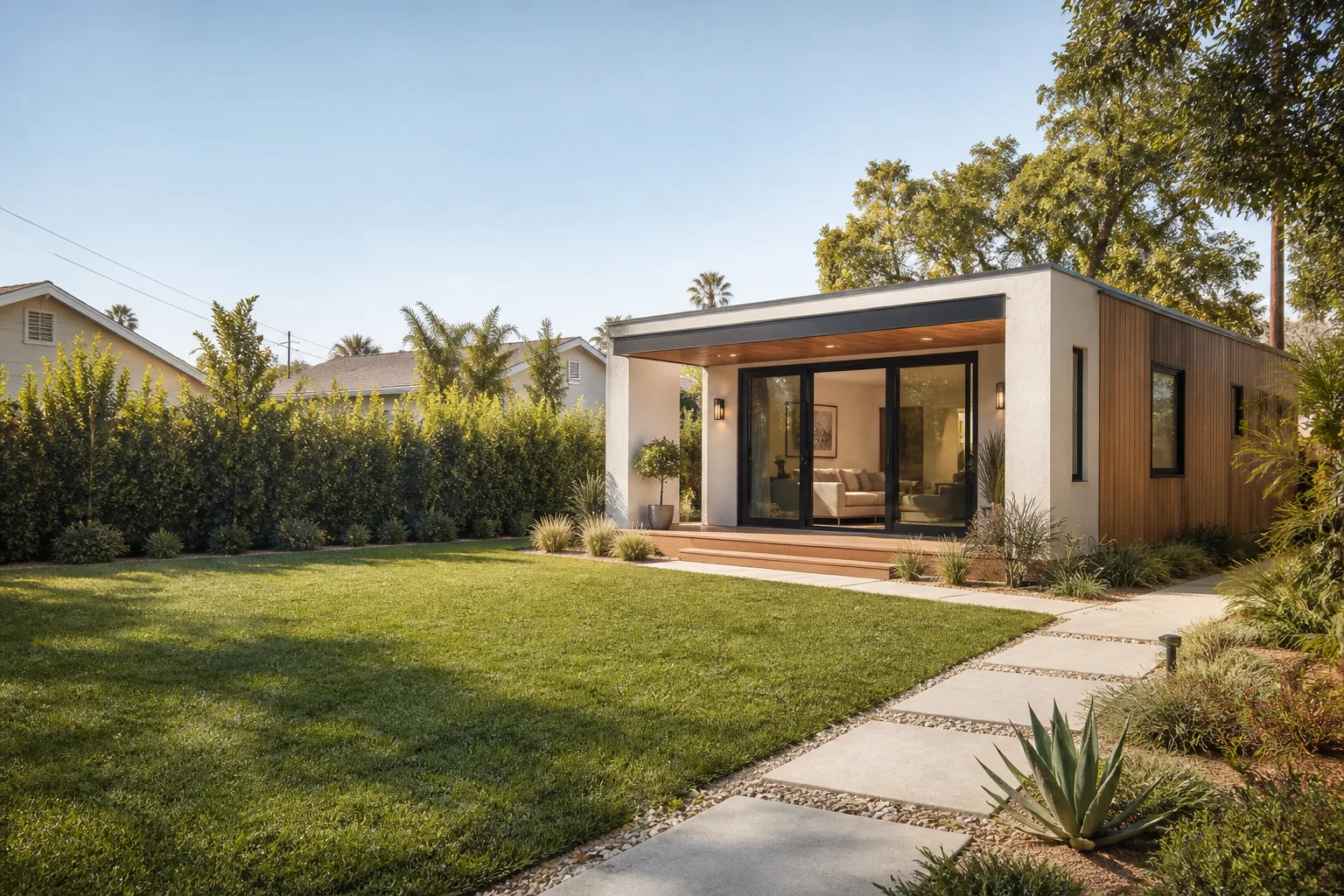
- Structure type. A prefab unit from Abodu or Cover arrives largely finished and installs faster. A stick-built addition is more customizable but carries more on-site labor. A garage conversion is the lowest-cost path when the shell is sound.
- Finish level. Builder-grade finishes versus custom tile, cabinetry, and fixtures can move the same floor plan by $30,000 or more. This is where homeowners have the most control.
- BCPU hookup timing. Boulder City’s utility scheduling affects when trades can finish their work. A project that waits on a hookup window lengthens the schedule, and schedule length is a cost.
Any quote you receive should show how each of these was handled. If it doesn’t, you can’t compare it to another quote honestly. This is the same discipline our team applies on every ADU build in Boulder City, where the written price has to account for all five before a shovel hits the ground.
What Permit and Impact Fees Actually Add in 2026
Permit and impact fees are the part of an ADU budget that catches people off guard, because they’re paid to the city and utility rather than the builder, so they often sit outside the construction number. In Boulder City, a homeowner should plan to budget a meaningful line for permits and connections separate from the build itself, and confirm current fee amounts directly with the city before signing anything, since fee schedules are updated periodically.
What those fees cover typically breaks into a few buckets:
- Plan review and building permits. Charged by the city based on project scope and valuation.
- Impact fees. Assessed for the added dwelling unit and its load on city services.
- Utility connection fees. Charged for water, sewer, and electrical service to the new structure.
- Inspection fees. Associated with the required inspections at each construction phase.
Because these figures are set by the city and change, we don’t quote a hard number here. What we will say is that we’ve watched homeowners underestimate this line and then scramble mid-build. Ask your contractor to itemize which fees they pull on your behalf and which you pay directly, and ask for the current schedule in writing. When you request an estimate through our Boulder City home base, we walk you through which costs sit inside the build price and which don’t, so there are no surprises after the deposit clears.
Site Prep and Caliche: The Line Most Quotes Underestimate
Caliche is a calcium carbonate layer that forms in desert soil and sets up hard, sometimes like low-grade concrete. When a grading crew hits it, the work shifts from moving dirt to breaking rock, and the cost goes up. In our experience across Boulder City lots, caliche is the single most common reason a project comes in over the original estimate when the contractor didn’t dig a test hole first.
Site prep for a detached ADU usually involves these steps:
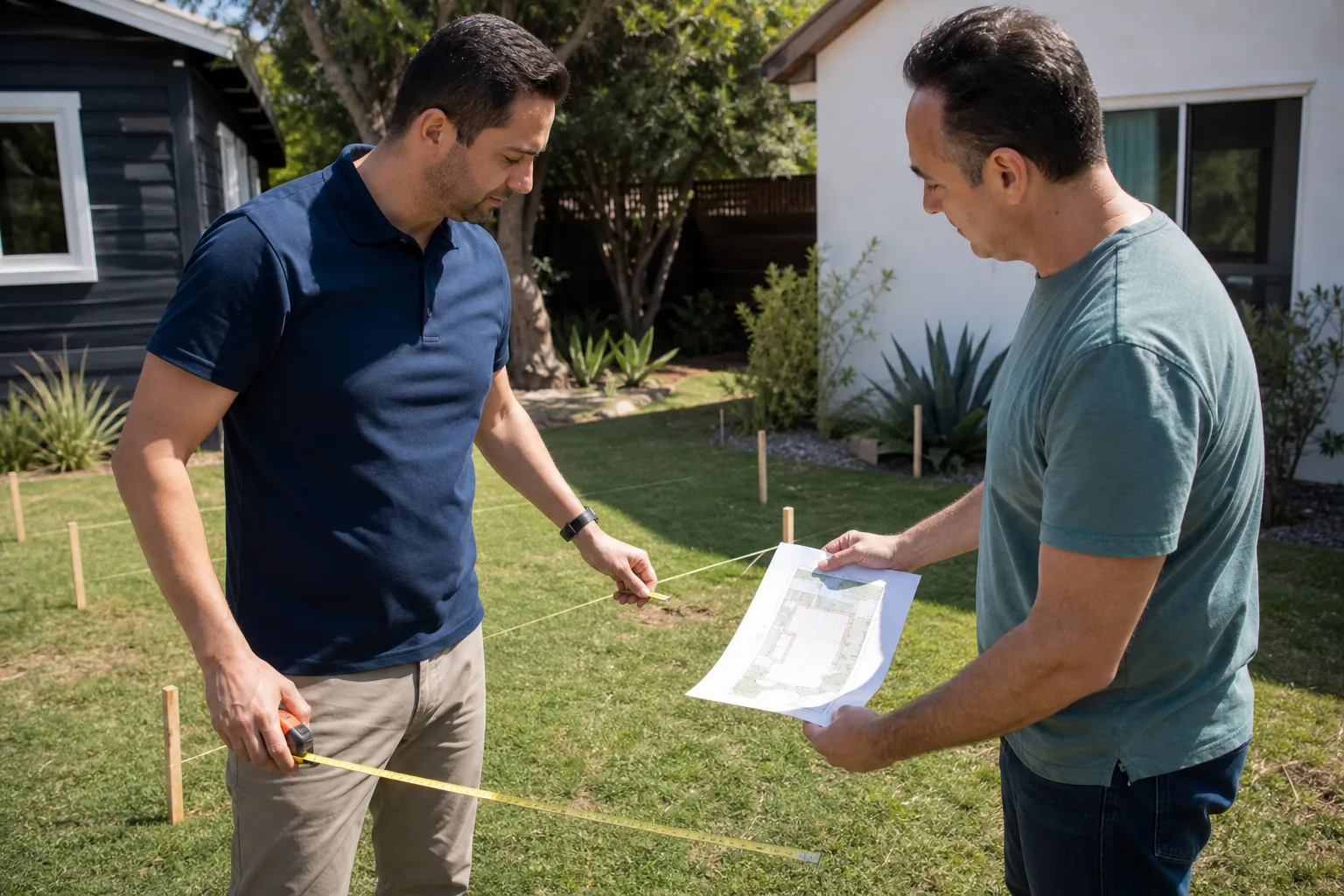
- Utility locate and a soil check, ideally with a test excavation to find caliche before the quote is final.
- Clearing and rough grading to the building pad elevation.
- Caliche removal or breaking where it’s encountered, plus haul-off of the broken material.
- Compaction to the engineered spec, which the city will inspect.
- Trenching for utilities and drainage.
On a flat, tested lot, site prep might run a few thousand dollars. On a lot with heavy caliche and a long utility run, it can climb into five figures fast. A contractor who quotes site prep as a flat allowance without testing is handing you a guess dressed up as a number. That guess becomes a change order the moment the excavator hits rock. Ask for a soil test before the price is locked, or at minimum ask how the quote handles caliche if it appears.
Why Desert-Specific Materials Cost More Upfront
Boulder City summers push past 110 degrees, and ultraviolet exposure here is relentless. Materials that perform in that climate cost more per unit than the cheap alternative, but the cheap alternative costs you every month afterward in energy bills and repair. Three places this shows up:
- Stucco and James Hardie cladding. A proper exterior assembly holds up to sun and heat cycling better than bare or cheap siding, which chalks, cracks, and fades. The upfront difference is real; the fifteen-year difference is larger.
- Radiant barrier sheathing. A radiant barrier in the roof assembly reflects heat before it enters the attic, which meaningfully reduces cooling load on a desert ADU. Skipping it saves a small amount now and costs a larger amount every July.
- High-efficiency HVAC. A right-sized, efficient system with proper zoning for a small unit keeps a detached ADU comfortable without running a unit designed for a whole house. Undersized or oversized systems both waste money, and in Boulder City the cooling load is the dominant cost.
This is where the long view pays off. A prefab line we work with, such as Abodu or Cover, builds these considerations into their base spec, which is part of why their numbers look higher on the surface but often close the gap over a decade of ownership. When we put together a Boulder City room addition, we spec the exterior and HVAC for the desert, not for a mild climate, because cheaping out here is the most expensive choice a homeowner can make.
How to Read a Contractor Quote for Vague Allowances
An allowance is a placeholder dollar amount for something not yet selected: flooring, tile, fixtures, sometimes site work. Allowances are legitimate when they’re used honestly and disclosed clearly. They become a problem when they’re set artificially low to make the total quote look smaller, because the real cost surfaces later as a change order. Learning to spot them is the highest-value skill in this whole guide.
Here’s what to look for:
- Underlined or bracketed allowances. Any line that reads “allowance” or “TBD” is a variable. Add up all of them and ask yourself if the total is realistic for the finishes you actually want.
- “Subject to site conditions” language. Sometimes legitimate, sometimes a catch-all. Ask specifically what conditions trigger a change and how they’d be priced.
- Missing caliche line. If site prep has no allowance at all and no soil test was done, that’s a gap, not a savings.
- Hazy scope descriptions. “Electrical as needed” is not a scope. It’s a blank check. Demand a line count or a description of what’s included.
- No written price guarantee. If the quote says the price may change, ask under what circumstances and get it in writing.
A quote that hides three allowances and two “subject to” clauses is not actually cheaper than one with a higher total but a locked price. It’s just better at hiding the final number. Compare quotes on what’s locked, not on the top-line total.
What a Locked Written Price Should Include
A locked price means the contractor has committed to a number in writing and will honor it even if their own estimate of labor or materials was low, with the only exceptions being changes you request or genuinely unforeseeable conditions disclosed up front. That’s a real commitment, and it’s the standard every homeowner should demand. Here’s what a locked price should contain versus what “subject to change” language looks like.
| Locked written price includes | “Subject to change” language looks like |
|---|---|
| Itemized scope, trade by trade | Lump-sum total with no breakdown |
| Named finishes or clearly defined allowances | “Allowance” amounts that are below market |
| Caliche handling priced or tested | No site prep line at all |
| Permit and fee responsibility spelled out | “Fees extra” with no amounts |
| Written guarantee terms | “Workmanship guaranteed” with no length |
How to negotiate the difference: ask the contractor to convert every allowance into either a firm number or a named product, and to add a written price guarantee. A contractor confident in their scope will do it. One who won’t is telling you something. On our projects the written price is delivered before work begins and the workmanship is backed by the 365-Day Done Right Promise, which covers defects in workmanship for one full calendar year from completion. That’s the standard we’d hold any contractor to, including ourselves.
Structure Type and Finish Level: Where the Real Dollars Live
Once site prep and fees are set, the two levers with the most room to move are what kind of structure you build and how deeply you finish it. Understanding the trade-offs helps you spend money where it actually improves the build.
Structure type compared
- Garage conversion. Lowest cost when the shell is sound and the ceiling height works. Requires resolving any existing code issues in the garage and is not right for every lot.
- Prefab detached ADU. A unit from a line like Abodu or Cover arrives controlled and installs predictably. Higher base price, fewer surprises, fast schedule.
- Stick-built detached ADU. Full customization, but more on-site labor and more exposure to weather and schedule. Often the right fit when the design has to match the main house precisely.
- Garage-top or second-story addition. Adds livable square footage above existing structure but carries more engineering and structural cost. Tops the range.
Finish level compared
Builder-grade finishes keep the budget in check. Custom tile, upgraded cabinetry, and premium fixtures can add tens of thousands. The honest way to decide is to ask which finishes you’d notice every day and which ones you’d stop seeing after a month. Spend on the former, stay builder-grade on the latter. A home addition contractor in Boulder City should be able to walk you through the finish tiers on your specific plan so you can see the dollars clearly before committing.
Common Mistakes to Avoid
- Budgeting without a soil test. Skipping the test excavation is how caliche becomes a surprise change order. Test first, price second.
- Comparing top-line totals only. A lower total with hidden allowances isn’t lower. Compare locked scope against locked scope.
- Forgetting the fees outside the build. Permit, impact, and utility fees are real costs. Budget for them alongside construction, not after.
- Underspecifying the desert. Radiant barrier, right-sized HVAC, and durable cladding cost more now and save far more later in Boulder City heat.
- Choosing the finish level by emotion on everything. Spend on the finishes you’ll see daily. Stay disciplined on the rest.
- Skipping the utility locate. Trenching blind in a desert lot can hit unmarked lines. Always locate before a shovel turns dirt.
- Accepting a verbal guarantee. A guarantee you can’t read isn’t one. Get the terms in writing, with a duration and what’s covered.
When to Call a Professional
Some of this breakdown is genuinely do-it-yourself information. Budgeting, comparing quotes, deciding finish tiers: all yours to handle. But the moment a project involves structural work, electrical service upgrades, gas lines, or grading through unknown soil, it belongs with a trained professional. Those aren’t places to learn by trial. If you’re at the point where you have a rough budget and want a real, itemized written price to compare against, that’s the natural next step. Sutton ADU Builders Boulder City offers free estimates in Boulder City – call (888) 296-0055. You’ll get a named, photo-badged point of contact and a written price before any work begins, which is exactly the comparison tool this guide has been pointing you toward.
Frequently Asked Questions
Detached ADUs in Boulder City generally run $180,000 to $320,000 before site-specific work, garage conversions $90,000 to $180,000, and garage-top additions toward the top of the range. The spread comes down to site prep, utility fees, structure type, finish level, and hookup timing. Call (888) 296-0055 for an exact quote – estimates are free.
The same square footage can carry very different costs because caliche grading, utility run distance, structure choice, and finish level each move the number independently. A tested flat lot with a prefab unit and builder-grade finishes and a rocky lot with a custom stick build are different projects at the same size. An itemized written price is the only way to see which levers were set where.
Often yes. Permit, impact, and utility connection fees are frequently paid to the city and utility rather than folded into the construction price, so budget for them as a separate line. Always confirm current fee amounts with the city and ask your contractor which fees they pull and which you pay directly.
Caliche is a hardened calcium carbonate soil layer common in desert ground that’s difficult and expensive to grade through. When it’s present and untested, it turns into a mid-project change order. A soil test before the price is locked is the honest way to handle it.
It shouldn’t if you were given a true locked written price with scope itemized and allowances resolved. Change orders should only come from changes you request or disclosed unforeseen conditions. Ask any contractor to put their price guarantee in writing, and walk away from vague “subject to change” language. Call (888) 296-0055 for a locked written price on your Boulder City project.
Yes, and it’s usually the lowest-cost path when the shell is sound and the ceiling height works. A garage conversion still requires resolving any existing code issues in the garage and confirming the lot and access allow it. It’s a strong first option to price before committing to a detached build.
The Bottom Line
The wide range in Boulder City ADU pricing isn’t noise. It’s five specific variables, and every honest quote itemizes them. Site prep through caliche, utility connection fees, structure type, finish level, and hookup timing are the levers. Permit and impact fees sit largely outside the build number and need their own line. Desert-specific materials cost more now and save more later. A locked written price shows what’s committed and what’s variable, and a quote full of allowances and “subject to change” language is hiding its real total. Know the levers, read the line items, and demand a locked price.
If you’d like that locked price on your own Boulder City project, call Sutton ADU Builders Boulder City at (888) 296-0055 for a free estimate. You’ll get a written price before any work begins, a 365-Day Done Right Promise on workmanship, and a named, photo-badged technician whose face you’ll see before they ever set foot on your property.
Written by the team at Sutton ADU Builders Boulder City.