Last updated November 18, 2026
The Complete ADU Builders Guide for Boulder City Homeowners
Nevada passed ADU-friendly legislation in 2021, and since then the internet has filled up with cheerful articles telling homeowners they can build an accessory dwelling unit just about anywhere in the state. Here’s the part those articles leave out: Boulder City retained local authority over several key restrictions, and the rules that govern a lot in Las Vegas or Henderson don’t automatically apply to a parcel inside Boulder City’s historic boundaries. Homeowners here answer to a stricter local ordinance, a smaller housing stock, and a desert climate that punishes shortcuts in ways the generic guides never mention. This guide covers what actually governs your property: the local ordinance, how detached units, attached units, and garage conversions are treated differently, real cost ranges, and how to vet an ADU builder before you sign.
Quick Answer
Boulder City allows ADUs, but its local ordinance is stricter than Nevada’s statewide framework in specific ways, most notably around lot coverage and owner-occupancy, so a parcel that would qualify in Las Vegas may not qualify here. Detached ADUs, attached ADUs, and garage conversions are each treated differently under Boulder City code, and costs range from roughly $110,000 for a garage conversion to $320,000 or more for a detached unit once desert-specific site work is included. Confirm zoning and setbacks on your specific parcel before you price anything.
Table of Contents
- What Boulder City’s ADU ordinance actually allows
- Detached, attached, or garage conversion: how the code treats each one
- What an ADU costs in Boulder City, and why the desert changes the number
- How to vet an ADU builder (not just a general contractor)
- What a written, locked price should include for an ADU
- The build process from lot check to final inspection
- Common mistakes to avoid
- When to call a professional
What Boulder City’s ADU ordinance actually allows
Start with this: Boulder City is one of the few municipalities in Nevada that kept meaningful local control over ADU rules after the 2021 state legislation. That means the “ADUs are legal everywhere in Nevada now” framing you’ve read elsewhere is only half the story. The state law set a floor of permissions, but Boulder City layered local restrictions on top of it, and those local restrictions are the ones that will actually decide whether your project moves forward.
The two areas where Boulder City’s ordinance bites hardest are lot coverage and owner-occupancy.
- Lot coverage is the percentage of your parcel that can be covered by buildings, and adding a detached ADU pushes that number up fast. On a small lot, the difference between passing and failing often comes down to how the ADU is sited and whether existing impervious surfaces can be reduced elsewhere.
- Owner-occupancy requirements mean the property owner typically has to live on-site, which rules out building an ADU purely as a rental investment on a lot you don’t occupy. This one trips up out-of-state buyers who assume the Las Vegas rules apply.
Setbacks matter too. A setback is the required gap between your new structure and the property line, and in Boulder City’s older neighborhoods the lots were platted before anyone was thinking about accessory units. A parcel that looks generous on a plat map can turn out to have very little buildable envelope once setbacks are applied. Zoning designations also vary block by block in the historic core, so the only reliable answer is a parcel-specific check of the zoning map, the lot coverage calculation, and the setback requirement together. We’d rather tell you a lot doesn’t work than sell you a design that gets rejected at the counter.
Detached, attached, or garage conversion: how the code treats each one
Not all three ADU types are treated equally under Boulder City code, and conflating them is the most common mistake we see. Here is how they actually differ.
Detached ADU
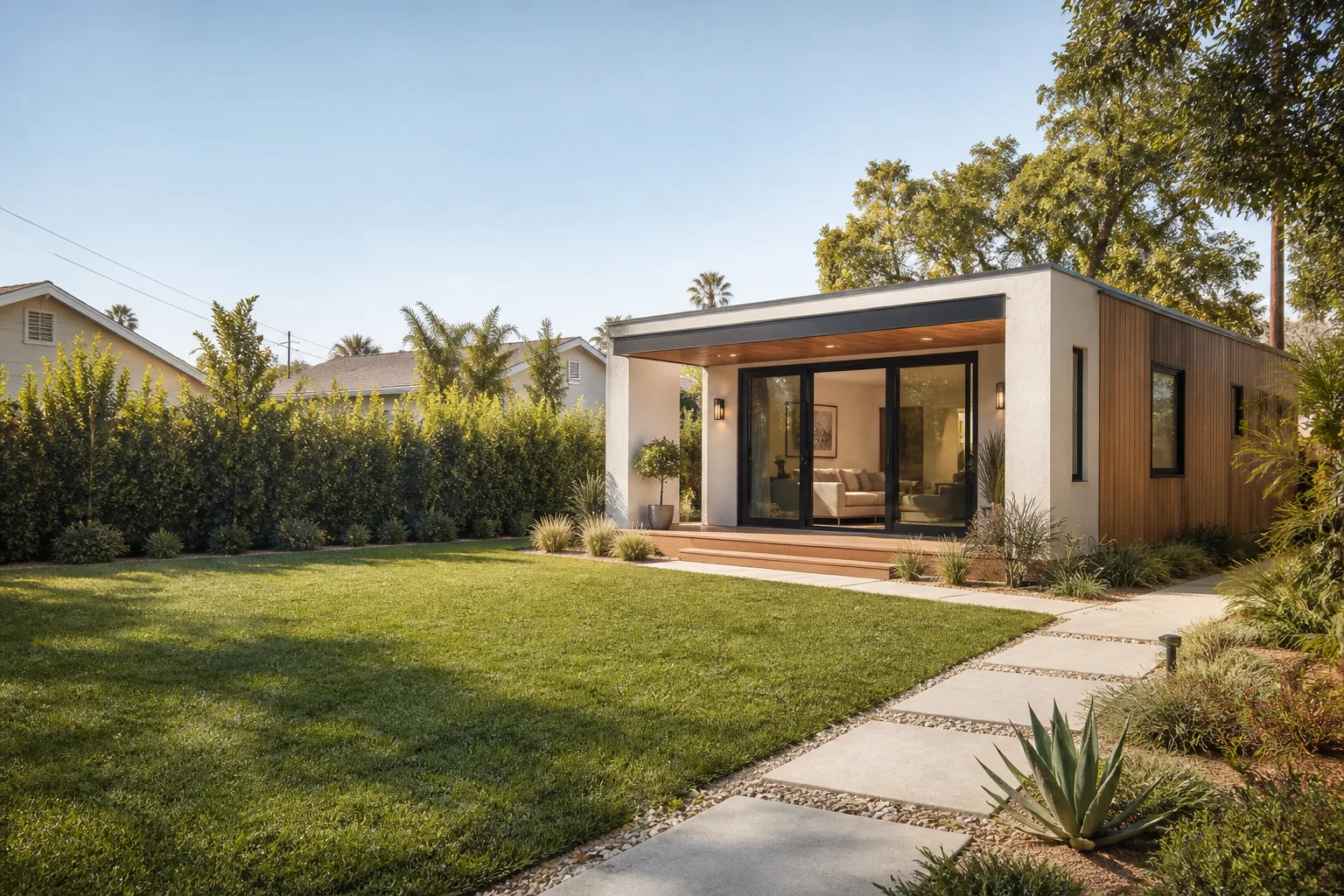
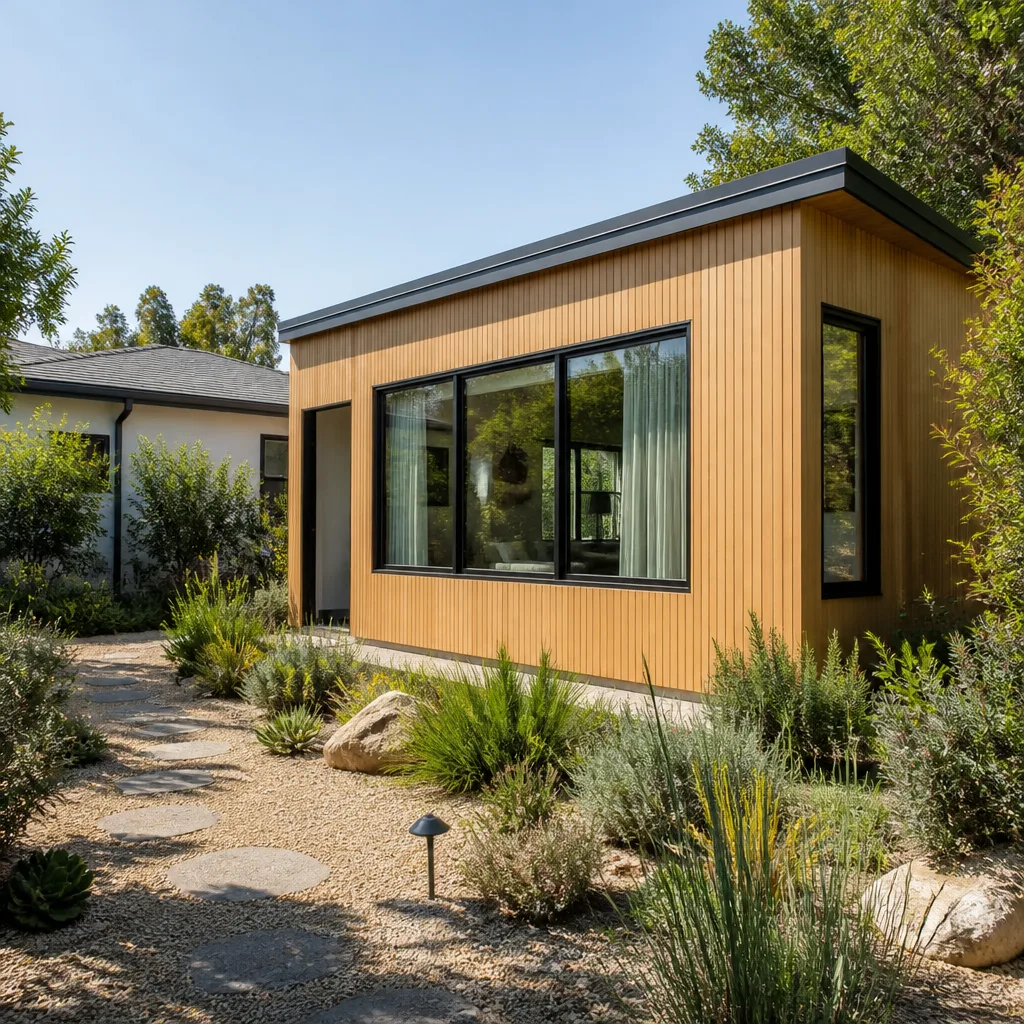
A freestanding structure on the same lot as the primary home. This is the most flexible type for privacy and rental separation, and the most expensive. It triggers a new foundation, a new utility trench, and full lot coverage review. It’s also the type most affected by the owner-occupancy provision, because the detached unit is the one buyers usually intend to rent out.
Attached ADU
A unit that shares a wall or roof plane with the primary house, whether as an addition, a converted upper floor, or a bump-out. Attached units often sidestep some of the coverage and setback pressure because they don’t add a separate footprint. They also share the home’s HVAC and electrical infrastructure, which can save real money, or blow the budget if the existing systems are already at capacity. This is where an Home Addition Contractor in Boulder City and an ADU specialist need to be the same conversation, since the structural work is essentially the same.
Garage conversion
Converting existing garage space. This is usually the cheapest and fastest path because the shell, slab, and often the utility stub-outs already exist. The catch is that a garage was never designed for living, so a conversion needs a proper floor elevation, insulation, and egress windows that the original structure doesn’t have. Under Boulder City code, a conversion also raises parking questions: if you eliminate a covered parking space, the ordinance may require you to replace it elsewhere on the lot.
If you’re weighing a conversion against a full addition, our Room Addition Contractor in Boulder City page walks through how the two compare on cost and timeline. Both paths involve real work, so it’s worth getting the comparison in writing before you commit.
What an ADU costs in Boulder City, and why the desert changes the number
Here are real ranges, so you can self-qualify before you call anyone. These are Boulder City numbers, not Las Vegas numbers, and they include the desert-specific factors that inflate budgets in this market.
- Garage conversion: roughly $110,000 to $180,000, depending on the condition of the existing shell and how much plumbing and electrical has to be added.
- Attached ADU (600 to 800 sq ft): roughly $160,000 to $260,000, with the high end driven by structural tie-ins and upgrades to the primary home’s systems.
- Detached ADU (600 to 900 sq ft): roughly $180,000 to $320,000 before site work, and higher once utility trenching and foundation depth are included.
Three desert factors push those ranges upward, and every one of them is Boulder City-specific:
- HVAC sizing. Boulder City runs hotter and more exposed than the valley floor, and a small unit with a standard single-zone system will fail to cool evenly in July. Correct sizing and a dedicated unit add cost, but undersizing it costs more in the long run.
- Foundation depth. The soil here includes caliche, a cemented layer that has to be broken through before you can pour footings. Caliche can turn a foundation day into a foundation week, and it’s rarely visible until excavation starts.
- Utility hookup costs. Trenching from the main to a detached unit is priced by the foot, and on a lot with rock or an awkward side yard, that line item surprises people. We put it in the written price so it can’t surprise you later.
Prefab and panelized options from brands like Plant Prefab or Abodu can shorten the build and sometimes bring the structure line down, but they don’t eliminate site work, foundation, or utility costs. If you go prefab, the builder still has to handle everything under the unit.
How to vet an ADU builder (not just a general contractor)
Building an ADU is different from building a room addition or a deck. It’s a small, complete dwelling with its own kitchen, bath, bedroom, and often its own utility service. A general contractor who does good kitchens may have never pulled an ADU permit or navigated Boulder City’s coverage review. Here’s how to tell the difference before you sign.
Ask for permit history, not references. A reference tells you whether someone liked the work. Permit history tells you whether the builder has actually built ADUs in this jurisdiction. Ask specifically for ADU permits they’ve pulled in Boulder City or within the immediate area, and ask how those permits were reviewed.
Ask who is coming to your property. You are inviting a crew onto your lot for months, not hours. Ask how the builder vets the people who will be there, whether you’ll know their names, and whether they carry photo identification. At Sutton ADU Builders Boulder City, under the Threshold Standard, every field technician is background-checked and identity-verified, and you get their name and photo before they arrive. That’s a policy you can ask any builder about, and a good one will answer without hesitation.
Ask what the guarantee actually covers. “We stand behind our work” is not a guarantee. Ask for it in writing, with the term and the scope spelled out. The 365-Day Done Right Promise covers defects in workmanship for one full calendar year from project completion, and if something fails, Sutton makes it right.
Ask about the written price. A verbal estimate is a number that can move. Ask whether the price is delivered in writing before any work starts, and whether it’s locked. Our written price is delivered before the first tool is lifted, and we don’t send a surprise invoice for changes no one agreed to.
What a written, locked price should include for an ADU
A written price only helps you if it includes everything, and if it includes the same line items from every builder you compare. Use this checklist to compare bids on equal terms.
- Design and permit fees, including any third-party review costs.
- Site preparation and excavation, with caliche allowance stated separately so you know what happens if it shows up.
- Foundation specifications, including depth and any engineered footings.
- Full framing and envelope, with the cladding system named. James Hardie exterior systems are a common choice here because they handle sun exposure, but any named product is better than “standard materials.”
- MEP rough-in and finish: mechanical, electrical, and plumbing, line by line, including HVAC sizing calculations.
- Utility trenching and hookup, priced by the foot.
- Interior finishes, specified by brand or grade, not described as “upgraded.”
- Inspection allowance and final walkthrough, plus cleanup and debris haul-off.
- The guarantee term, named and dated.
If a line item is missing, ask for it in writing. If a builder won’t put it in writing, that’s your answer. Comparing bids this way is how you catch the “cheap” bid that leaves out trenching and foundation depth.
The build process from lot check to final inspection
Here’s the sequence, in order, so you know what to expect at each stage.
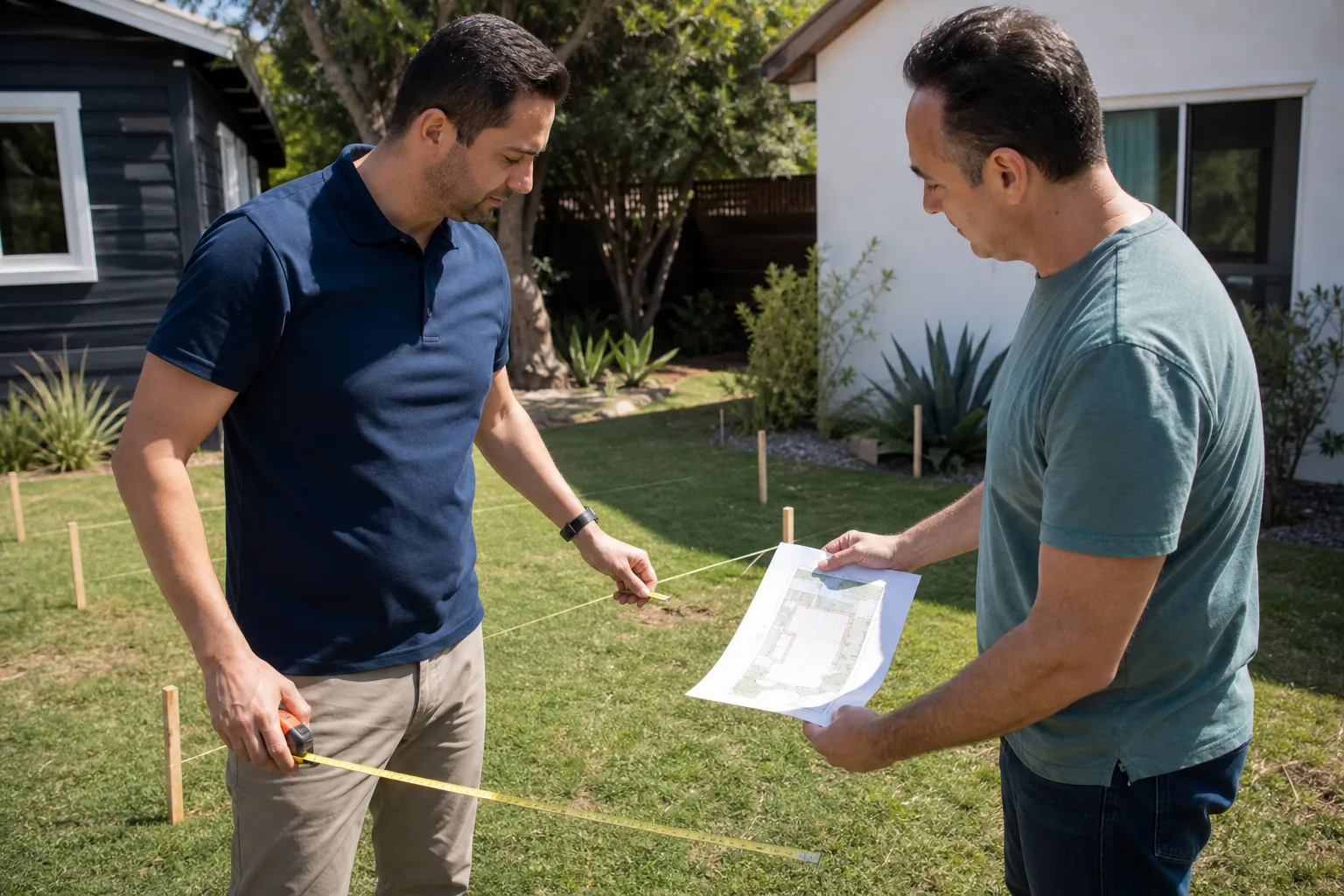
- Parcel check. Pull zoning, lot coverage, setbacks, and owner-occupancy status for your specific address. This is where a lot either works or doesn’t, and it’s the step most homeowners skip.
- Feasibility and sizing. Agree on the ADU type, the square footage, and how the footprint sits relative to the setbacks and coverage limits.
- Design and engineering. Produce the plans, structural calcs, and title-24 energy documentation required for submittal.
- Permit submittal and review. Submit to Boulder City and respond to plan-check comments. This is the stage where local knowledge saves weeks, because reviewers flag what the local ordinance actually requires.
- Site work and foundation. Excavation, caliche remediation if needed, footing, and slab. This is the stage most vulnerable to delays.
- Framing, envelope, and MEP rough-in. The structure goes up, gets dried in, and the mechanical, electrical, and plumbing systems are run.
- Insulation and finishes. Drywall, cabinetry, flooring, fixtures, and paint.
- Inspection and final walkthrough. Pass the final inspection, walk the unit with the builder, and collect your written guarantee.
Prefab and modular products from brands like Plant Prefab can compress steps 5 through 7, but the parcel check, permit, and utility work remain the same. A real person answers our phone around the clock, so when a question comes up mid-build you’re not leaving a voicemail. Start at our ADU Builders in Boulder City page to see the full range of what we build.
Common Mistakes to Avoid
- Applying Las Vegas rules to a Boulder City parcel. Statewide ADU guidance is a starting point, not the ordinance. Boulder City’s lot coverage and owner-occupancy requirements are where projects fail.
- Ignoring lot coverage on a small lot. A detached unit that fits on one side of the lot may push you over the coverage limit on another. Calculate coverage before you design, not after.
- Assuming a garage conversion needs no egress or parking replacement. A garage wasn’t built for living, and eliminating a parking space can trigger a replacement requirement under Boulder City code.
- Budgeting for the structure and forgetting the desert. Foundation depth, caliche remediation, and utility trenching are real line items in Boulder City, and they’re the first thing a cheap bid leaves out.
- Hiring a general contractor who has never pulled an ADU permit. Kitchens and additions don’t teach you the coverage review. Ask for ADU permit history before you sign.
- Accepting a verbal estimate. A number you can’t see in writing is a number that can move. Get it locked and itemized.
- Skipping the question of who comes to your property. Months of work with an unfamiliar crew is a real concern. Ask how the builder vets every person who will be on-site.
When to Call a Professional
Call before you design, not after. The parcel check is the step that decides the project, and it’s the step most homeowners do last. If you’re unsure whether your address qualifies under Boulder City’s ordinance, if you’re weighing a detached unit against a garage conversion, if you’ve been told by a neighbor that “ADUs are legal everywhere now,” or if you’ve received a bid and can’t tell whether it’s complete, that’s the moment to bring in someone who knows the local rules. Site work is also no place for DIY: caliche, trenching, and utility hookups are the components that most often go wrong, and the correction cost dwarfs the original price. Sutton ADU Builders Boulder City offers free estimates in Boulder City, with a written price before any work begins and the 365-Day Done Right Promise on every project. Call (888) 296-0055 for a free estimate, and a live person will answer.
Frequently Asked Questions
State law permits ADUs, but Boulder City retained local authority over key restrictions, so you still have to clear the local ordinance. Lot coverage and owner-occupancy requirements are the two that most often decide whether a specific parcel qualifies. Call (888) 296-0055 for a free estimate and we’ll check your address.
Most garage conversions run $110,000 to $180,000, attached ADUs $160,000 to $260,000, and detached ADUs $180,000 to $320,000 before site work. Desert-specific factors like caliche remediation, foundation depth, and utility trenching push the detached figure higher. Call (888) 296-0055 for an exact quote; estimates are free.
It shouldn’t, and you should ask any builder that question directly. Sutton delivers a written, locked price before the first tool is lifted, and we don’t pass scope creep silently to the bill. If a legitimate change is needed, it’s agreed in writing first.
Permitting is part of the project, not something the homeowner should be left to navigate. Boulder City’s review process includes a coverage and setback check that a plan must survive. Ask any builder how they handle plan-check comments, and expect a specific answer.
Timeline depends on the type and the site. A garage conversion is typically faster than a detached build because the shell and slab exist. Detached ADUs carry longer foundation and utility phases, and caliche can add days to excavation. Call (888) 296-0055 for a timeline based on your parcel.
An ADU builder has pulled ADU permits in the local jurisdiction and knows the coverage, setback, and owner-occupancy rules that apply there. A general contractor may be excellent at kitchens and additions and still have never navigated an ADU plan review. Ask for permit history, not just references.
The Bottom Line
Boulder City’s ADU ordinance is stricter than the statewide framework in specific, consequential ways, and the articles written for Las Vegas will lead you wrong on lot coverage and owner-occupancy. Confirm your parcel first. Choose the ADU type based on how the code treats it, not on what looks cheapest. Budget for desert site work: caliche, foundation depth, and trenching. Vet your builder on ADU permit history and on who will actually be on your property, and compare bids against a written checklist so no line item goes missing. Then get the price in writing, with the guarantee term named. That’s the whole process, and it’s far easier to get right before you sign than after.
Ready to find out whether your Boulder City lot qualifies? Visit our Sutton ADU Builders Boulder City home page to explore the full range of what we build, and call (888) 296-0055 for a free estimate. A live person answers around the clock, you’ll get a written price before any work begins, and every project comes with the 365-Day Done Right Promise.
Written by the team at Sutton ADU Builders Boulder City.